Introduction & quick answer: common side effects of fasting
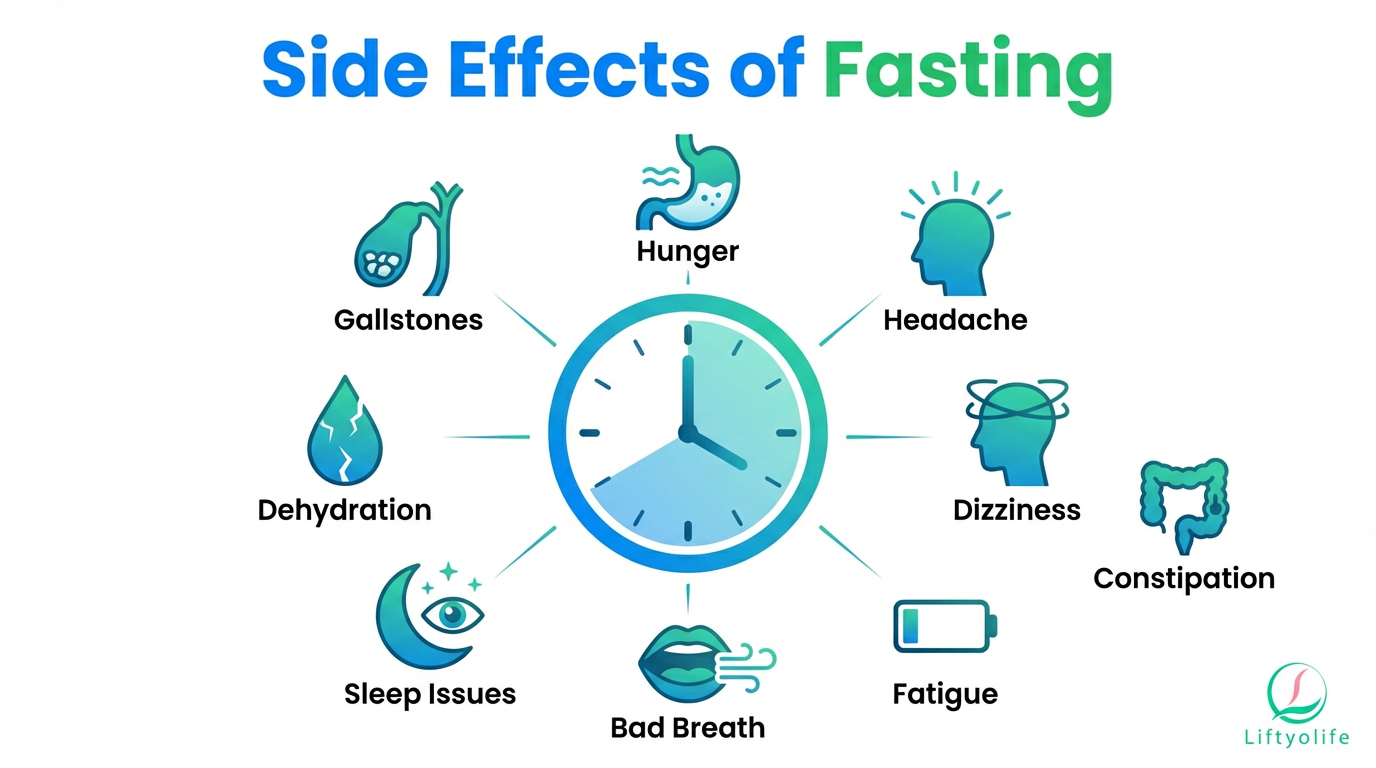
Common side effects of fasting include: hunger, headaches, dizziness, brain fog, digestive issues, irritability, fatigue, bad breath, sleep changes, and dehydration. This Liftyolife guide groups short-term symptoms vs longer-term risks and shows when to stop and seek care.
- Hunger and cravings: Strong hunger waves are common early; they often ease as your body adapts over days.
- Headaches: May stem from dehydration, caffeine shifts, or low blood sugar; respond to fluids and regular routines.
- Dizziness or lightheadedness: Can occur with low blood pressure or low glucose; sit down and rehydrate promptly.
- Brain fog: Short-lived concentration dips may follow long gaps between meals; sleep and hydration help.
- Digestive issues: Constipation, nausea, or bloating can follow irregular meal timing; fiber and gentle meals ease symptoms.
- Irritability or mood changes: Temporary mood swings can occur as glucose and hormones fluctuate.
- Fatigue: Energy can dip, especially if training hard or not eating enough during your window.
- Bad breath: Ketosis can cause a fruity or metallic breath odor; hydration and oral hygiene help.
- Sleep disturbances: Caffeine timing and late meals can shift sleep; keep a steady routine.
- Dehydration/electrolyte shifts: Less frequent drinking and lower insulin can increase fluid loss; replace fluids and electrolytes when appropriate.
Medical disclaimer: This information is educational and not a substitute for personalized medical advice.
What is fasting? Types and patterns
Fasting means going without food—and sometimes drinks—for a set period. Side effects vary by fasting style, duration, and your health status.
Intermittent fasting and time-restricted eating (TRE)
- Time-restricted eating (like 16:8) limits food to a daily window and fasts the rest.
- Other IF patterns include alternate-day fasting and 5:2 (two low-calorie days weekly).
For an overview of apps and approaches, see this independent intermittent fasting app review.
Prolonged fasts: 24–72 hours and multi-day
- 24–48 hour fasts extend beyond a day, with higher risks of dehydration, dizziness, and electrolyte shifts.
- 72 hours or longer increases risks further and generally warrants medical supervision.
Religious fasting (e.g., Ramadan)
- Ramadan involves no food or drink from dawn to sunset, which changes hydration and sleep patterns.
- Medical conditions (like diabetes) may require tailored plans or avoiding fasting.
How fasting affects your body (short-term changes)
- Blood sugar and insulin: Glucose falls between meals. Insulin drops, which helps fat breakdown but can cause hunger, headaches, and fatigue during adaptation.
- Cortisol and stress response: Cortisol may rise mildly, especially early, affecting mood and sleep for some.
- Hydration and electrolytes: Lower insulin increases sodium and water excretion. Inadequate fluids can lead to dizziness, cramps, or palpitations.
- Ketosis and breath changes: With longer gaps, fat is converted to ketones, sometimes causing a fruity, metallic breath odor.
- Gut motility: Irregular meal timing can slow bowel movements or cause bloating when you refeed quickly.
Here’s the idea: early fasting shifts your fuel from glucose to fat. Those transitions explain many short-term symptoms. Most people adapt within 1 to 2 weeks. If symptoms persist or worsen, reconsider your approach or consult a clinician.
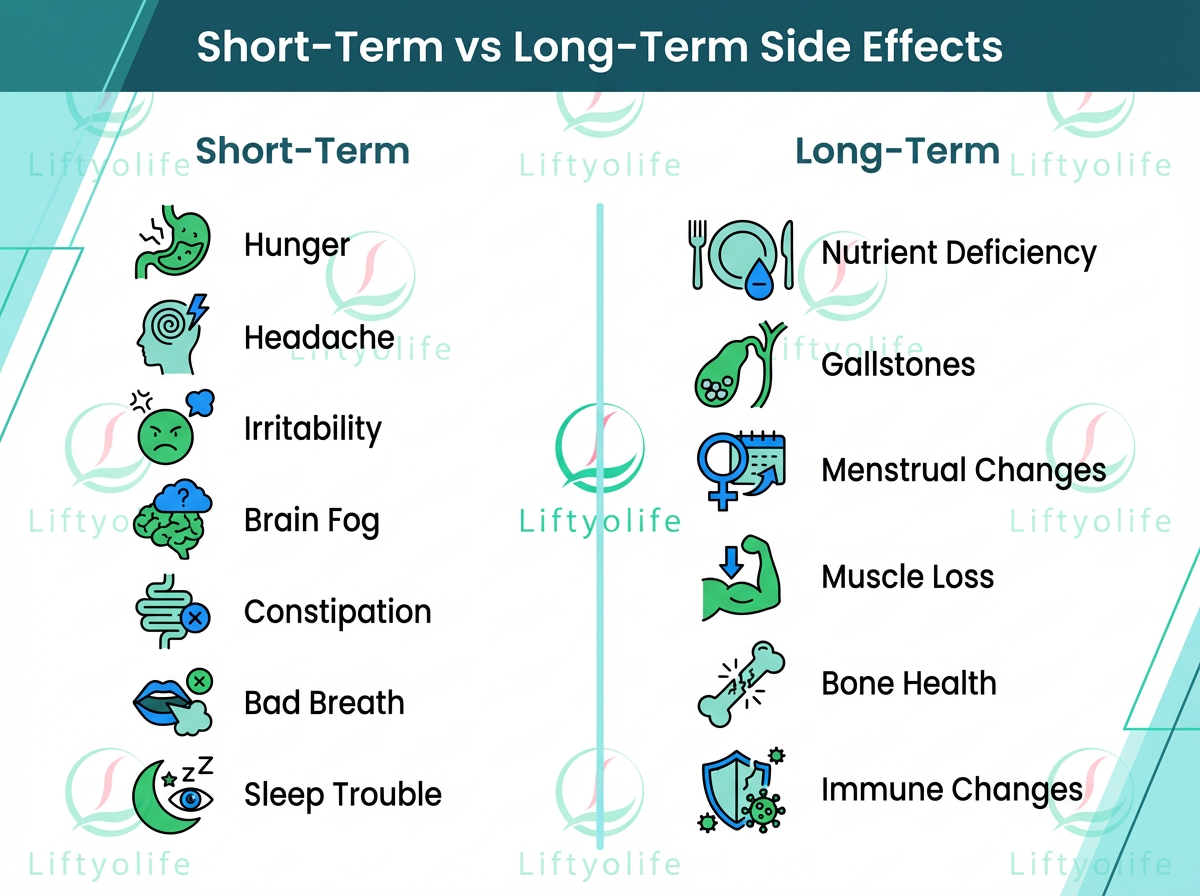
Short-term vs long-term side effects (at-a-glance)
| Short-term (hours–2 weeks) | Long-term (weeks–months) |
|---|---|
| Hunger, cravings | Nutrient deficiencies |
| Headaches | Menstrual changes |
| Dizziness | Gallstones risk |
| Brain fog | Muscle loss |
| Irritability | Low blood pressure |
| Sleep trouble | Mood changes |
| Dehydration/electrolytes | Blood sugar swings |
Common short-term side effects explained
Hunger and cravings
- Hunger spikes often align with your old meal times and tend to fade with routine.
- Focus on protein, fiber, and volume foods during your eating window.
- Try this: Delay your first fast by 30–60 minutes each day until you reach your target window.
Headaches and dizziness
- Common early on, especially with low fluids, caffeine withdrawal, or low blood sugar.
- Sip water regularly; consider an electrolyte source if you sweat or exercise.
- Try this: If dizziness persists when standing, shorten your fast and rehydrate with fluids and salty foods.
Brain fog and concentration issues
- Often improves as you adapt; poor sleep and dehydration worsen it.
- Keep caffeine consistent and earlier in the day to protect sleep.
- Try this: If work requires focus, choose a moderate plan (14:10 or 12:12) while you adjust.
Digestive issues (constipation, nausea, bloating)
- Fewer meals can reduce fiber and fluids, slowing motility.
- Break fasts gently with protein, produce, and fluids; avoid large, ultra-processed meals.
- Try this: Add 1–2 fiber-rich foods per meal and drink water with meals.
Irritability and mood changes
- Mood swings can reflect low blood sugar, poor sleep, or stress.
- Balance meals with protein, complex carbs, and healthy fats to stabilize energy.
- Try this: Short walks, light exposure, and breathing exercises can steady mood during fasting hours.
Fatigue and exercise intolerance
- Training hard while fasting increases fatigue risk.
- Scale workouts on fasting days; refuel with protein and carbs during your window.
- Try this: Keep intense sessions near or within your eating window.
Bad breath and dry mouth
- Ketosis and dry mouth can cause unpleasant breath.
- Hydrate, brush or scrape your tongue, and consider sugar-free gum.
- Try this: Herbal tea or sparkling water can reduce dry mouth without breaking most fasts.
Sleep disturbances
- Late heavy meals, caffeine timing, and stress can disrupt sleep.
- Keep caffeine before midday and finish large meals 2–3 hours before bedtime.
- Try this: Preserve a regular sleep-wake schedule during fasting.
Dehydration and muscle cramps
- Fewer drinking opportunities and higher sodium loss can cause cramps and palpitations.
- Include fluids across your eating window; consider salty foods or electrolyte solutions if appropriate.
- Try this: If you sweat, use an electrolyte beverage with sodium and small amounts of potassium and magnesium.
For basics on starting IF gradually, this practical overview of how people try intermittent fasting includes beginner tips.
Longer-term risks and side effects
Extended or aggressive fasting can increase health risks. Individual tolerance varies, and preexisting conditions matter.
- Muscle loss and unintentional weight loss: Prolonged fasting can reduce lean mass. Prioritize strength training and 1.0–1.6 g/kg/day of protein during your eating window.
- Nutrient deficiencies and malnutrition: Limited eating windows may reduce micronutrients like iron, B12, folate, calcium, and electrolytes. Watch for hair loss, brittle nails, fatigue, or pallor.
- Gallstones and gallbladder issues: Rapid weight loss and long fasting intervals can raise risk of gallstones and biliary pain.
- Hormonal changes: Low energy availability can disrupt menstrual cycles and may influence thyroid-related hormones for some people.
- Blood sugar swings: In people with diabetes and those without, aggressive fasting can cause hypoglycemia or rebound hyperglycemia when refeeding.
Stop and seek help if you notice persistent faintness, chest pain, confusion, ongoing vomiting, black stools, or new severe abdominal pain.
Side effects by fasting type (comparison table)
| Side effect | Time-restricted (16:8) | Alternate-day/5:2 | 24–48 hours | 72h+ | Religious (Ramadan) |
|---|---|---|---|---|---|
| Hunger | Mild to moderate | Moderate | Moderate to high | High | Varies by meal timing |
| Headaches/dizziness | Early, mild | Early, moderate | Moderate | Higher risk | Dehydration-related risk |
| Digestive issues | Constipation possible | Bloating on refeed | Nausea on refeed | Nausea/constipation | Changes with late meals |
| Sleep changes | If meals late | Variable | Possible | Common | Fragmented sleep |
| Dehydration/electrolytes | Low to moderate | Moderate | Moderate | Higher risk | Daytime no fluids |
| Gallstones risk | Low to moderate | Moderate | Moderate | Higher | Depends on weight loss |
| Nutrient deficits | Unlikely if balanced | Possible | Possible | More likely | Possible if intake poor |
| Medication interactions | Time dosing to meals | Care on low-cal days | Plan doses | Medical oversight | Adjust for suhoor/iftar |
Notes:
- Some religious fasts prohibit fluids during daylight, increasing dehydration risk.
- Longer fasts increase electrolyte shifts; medical oversight is prudent beyond 48–72 hours.
- People on meds requiring food should take them with meals or consult a clinician.
Who is at higher risk from fasting?
- Children, teens, and young adults: Growth and development need steady energy and nutrients.
- Older adults: Higher risk of dehydration, dizziness, and nutrient deficits; polypharmacy complicates timing.
- Pregnant or breastfeeding people: Increased nutrient and fluid needs; fasting may reduce milk supply or affect fetal growth.
- People with diabetes: Risk of hypoglycemia, hyperglycemia, dehydration, and medication timing challenges.
- Cardiovascular disease or low blood pressure: Fasting can lower blood pressure; dizziness and falls may increase.
- History of eating disorders: Fasting can trigger disordered patterns; avoid without specialist care.
- Significant anxiety or depression: Mood symptoms may worsen; monitor closely.
- Underweight or frail individuals: Muscle loss and malnutrition risk is higher.
- People taking medications needing food (NSAIDs, some steroids, certain antidepressants): Dosing may require meals.
Warning signs: when to stop fasting and seek help
Stop now and break your fast if:
- You faint, feel confused, or develop chest pain.
- You have severe or worsening dizziness that does not resolve with fluids and rest.
- You have persistent vomiting or cannot keep fluids down.
Call your clinician soon if:
- You have ongoing severe headaches, a racing heartbeat, or unusual weakness.
- You notice black stools, severe abdominal pain, or signs of dehydration (very dark urine, little urination).
- You monitor blood sugar and see repeated extremes or cannot keep levels stable.
People with diabetes: Discuss a plan before fasting. You may need to adjust medication timing and glucose targets under medical guidance.
How to reduce fasting side effects safely
- Ease in gradually. Shorten your eating window stepwise (for example, 12:12 to 14:10) to allow adaptation.
- Hydrate on a schedule. Aim to drink across your eating window; consider electrolytes if you sweat or experience cramps.
- Build balanced meals. Prioritize protein, fiber, and micronutrient-rich foods; limit ultra-processed foods that spike blood sugar.
- Choose a flexible fasting style. If symptoms persist, try a wider window or fewer fasting days. Weekly 24-hour fasts are not for everyone; see this overview of a cautious weekly 24-hour fast approach.
- Protect sleep and manage stress. Keep caffeine earlier, maintain a wind-down routine, and use light activity to reduce stress.
- Time medications safely. Take meds that require food with meals; ask your pharmacist or clinician about options.
- Know when to get help. If side effects persist or worsen, stop and speak with a healthcare professional.
Frequently asked questions (FAQ)
Is fasting every day bad for you?
Daily time-restricted eating may work for some, if symptoms are mild and nutrition is solid. Risks rise with very short eating windows or prolonged fasts. Avoid if you are pregnant, breastfeeding, a teen, underweight, or have certain conditions. See a clinician if symptoms persist.
What are normal side effects of fasting vs signs I should stop?
Normal: hunger, mild headaches, light fatigue, temporary brain fog. Stop if fainting, confusion, chest pain, severe dizziness, or vomiting. People with diabetes: stop if blood sugar drops too low or spikes.
Do 24-hour fasts have different side effects than 3-day fasts?
24-hour fasts: more hunger, headaches, and sleep changes; usually reversible. 3-day fasts: higher risk of dehydration, electrolyte shifts, dizziness, and nutrient deficits. Longer fasts warrant medical oversight.
Can fasting trigger anxiety or depression?
Some people experience irritability, mood swings, or anxiety. Pre-existing mental health conditions may worsen; avoid unsupervised fasting. Seek professional guidance before trying.
Can fasting affect menstrual cycles or hormones?
Some notice cycle changes with aggressive or prolonged fasting. Nutrient deficits and low energy availability can disrupt hormones. If cycles change or stop, discontinue and speak to a clinician.
What side effects should people with diabetes expect when fasting?
Hypoglycemia or hyperglycemia; monitor closely. Dizziness, weakness, and dehydration risk. Medication timing may need adjustment; consult your healthcare provider.
Does fasting cause gallstones?
Rapid weight loss and prolonged fasting can increase gallstone risk. Risk varies by individual; discuss with a clinician if you have a history.
How can I reduce headaches and dizziness while fasting?
Hydrate regularly; consider electrolytes if appropriate. Avoid excessive caffeine; break your fast gently if symptoms persist. Ease into shorter fasting windows.
Is fasting safe for older adults?
Older adults face higher risks of dehydration, dizziness, and nutrient deficits. Use caution, choose flexible windows, and monitor symptoms. Discuss with your healthcare provider first.
What should I eat during my eating window to minimize side effects?
Center meals on protein, fiber, and micronutrient-rich foods. Include hydration and electrolytes as appropriate. Limit ultra-processed foods that cause blood sugar swings.
Key takeaways & safe fasting checklist
- Short-term effects often fade with adaptation; persistent symptoms are a signal to adjust or stop.
- Longer-term risks include nutrient deficiencies, menstrual changes, gallstones, and muscle loss.
- Higher-risk groups should avoid unsupervised fasting.
- Hydration, electrolytes, and balanced meals reduce many issues.
- Stop and seek help if severe symptoms appear.
Liftyolife’s safe fasting checklist:
- [ ] Am I pregnant, breastfeeding, under 18, older, underweight, or managing chronic illness?
- [ ] Do my medications require food, or do I need dosing changes?
- [ ] Can I meet protein, fiber, and micronutrient needs in my eating window?
- [ ] Do I have a plan for hydration and electrolytes?
- [ ] Have I chosen a cautious start (12:12 or 14:10) and scheduled a check-in with my clinician?
References & how we reviewed this article
- National Institutes of Health. To Fast or Not to Fast? (2019).
- NIDDK. Gallstones. (2020).
- IDF-DaR. Practical Guidelines for Diabetes Management During Ramadan. (2024).
- Diabetes Care. Recommendations for Management of Diabetes During Ramadan. (2010).
- FDA. Guidance for Industry: Food-Effect Bioavailability and Fed Bioequivalence Studies. (2019).
- Johns Hopkins Diabetes Guide. Religious Fasting and Diabetes. (2022).
- Nature Communications. Metabolic responses to fasting. (2024).
- Endocrine Reviews. Intermittent fasting and human metabolism: a review. (2024).
- NIH/NIA. Can Fasting Reduce Disease Risk? (2021).
- PMC. Safety of Medically Supervised Prolonged Fasting. (2021).
Author, medical reviewer & disclaimers
Author: Matthew – Liftyolife