Why Am I Fat? Common Reasons You’re Not Losing Weight (Even After Trying)
If you’ve caught yourself thinking “why am I fat” after a whole month of cutting fast food and exercising, don’t worry because you are not alone. This guide covers the most common reasons people gain fat or hit a weight loss plateau, how to tell water weight vs fat, what medications and hormones can change, and when weight gain could be medical.
If you’re asking “Why am I fat?” you’re not alone
Effort and results do not always match week to week. You can be exercising, cooking more at home, and saying no to treats, yet the scale still feels stuck. That disconnect is common, and it is one of the most demotivating parts of trying to lose weight.
Also, many people use the word fat when they really mean “I don’t feel like myself” or “my health is slipping.” Here, I’ll use terms like overweight, obesity, and fat gain without judgment so you can troubleshoot your situation with clarity.
Disclaimer: If you have rapid weight gain, swelling, chest pain, or shortness of breath, seek urgent medical care.
Quick answer
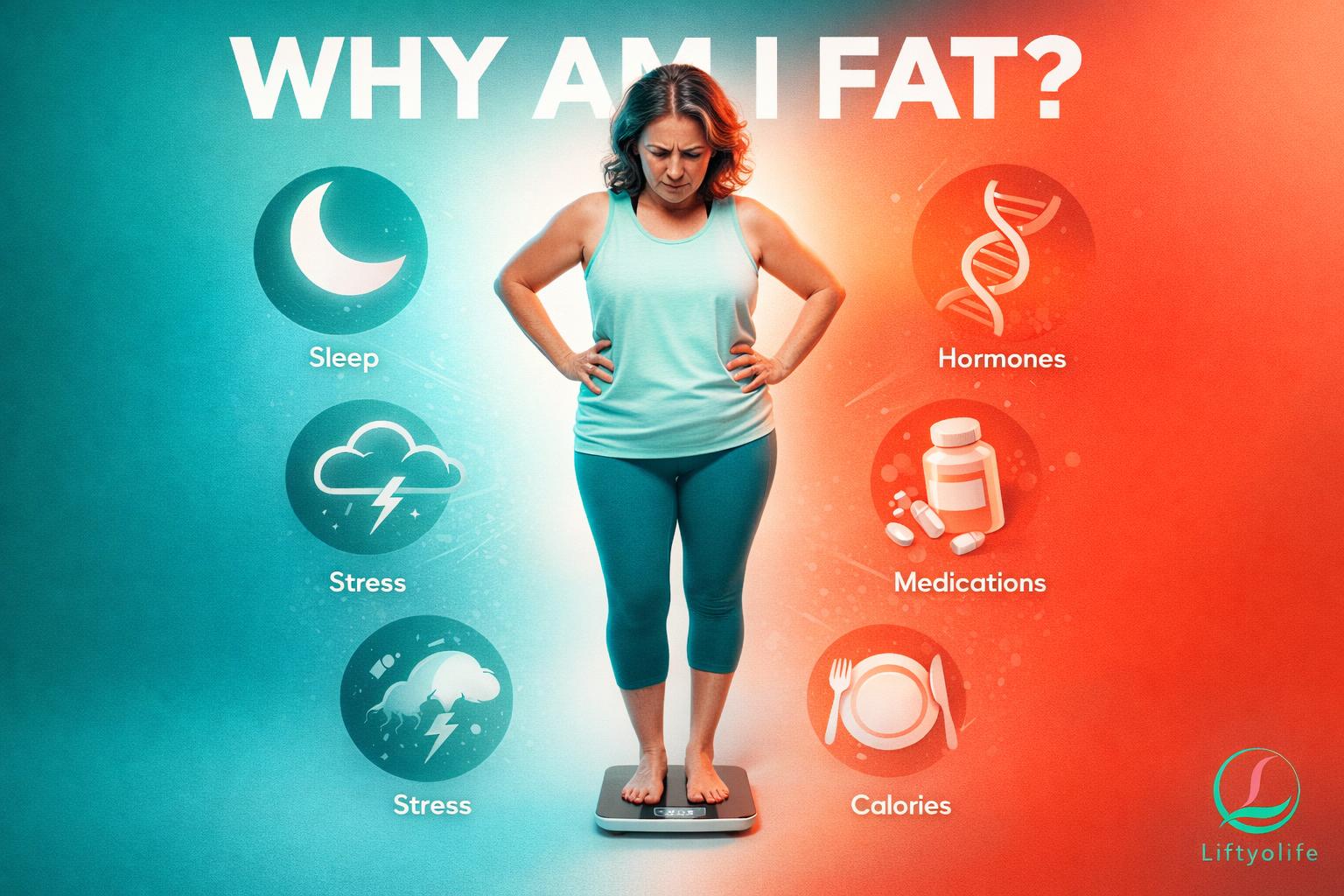
If you’re wondering why am I fat, the most common reason is that your energy balance has shifted so you take in more calories than you burn, even if it does not feel that way day to day. Sleep loss, stress, lower daily movement, medications, hormones, and water retention can increase hunger, reduce daily calorie burn, or temporarily mask fat loss on the scale.
- Portions and cooking oils add up faster than expected
- Liquid calories like alcohol and sweet drinks do not satisfy hunger
- Less daily movement (NEAT) can quietly drop your calorie burn
- Sleep debt can shift hunger hormones like leptin and ghrelin
- Stress can drive cravings and disrupt routines
- Medications and medical conditions can change appetite or fluid balance
Pick your situation
Use this section to jump straight to what fits you best. You’re not diagnosing yourself here, you’re narrowing down likely explanations.
- I’m exercising but the scale won’t move
- I gained weight suddenly
- My belly is getting bigger and When weight gain might be medical
- I’m eating less but still not losing
- I started a new medication
- I’m in my 40s/50s (hormone changes)
Fat gain vs water weight vs bloating
A sudden jump on the scale can feel like proof you are “failing.” But fast changes are often not fat.
- Fat gain usually happens slowly, over weeks to months.
- Water weight can move quickly, often within 1 to 3 days. It can change with sodium, higher carbs, travel, poor sleep, or muscle soreness after workouts.
- Bloating is often gut-related fullness or distention. You can feel bigger without actually gaining fat.
| Type | Typical timeline | Common signs | What helps | When to see a doctor |
|---|---|---|---|---|
| Fat gain | Weeks to months | Clothes tighter slowly | Consistent habits | Ongoing unexplained gain |
| Water weight | 1 to 3 days | Puffy, tight rings | Hydration, lower salt | Swelling with breathing issues |
| Bloating | Hours to days | Pressure, gas, fullness | Slow eating, fiber, fluids | Severe pain or blood |
Red flags: Rapid weight gain over days plus pitting swelling, shortness of breath, chest pain, or one-sided leg swelling needs prompt medical evaluation. Fluid retention can signal heart, kidney, or liver issues, and it should not be waited out.
The core mechanism: energy balance
Body fat changes mainly come down to energy balance, meaning calories in compared with calories out. That is not a moral statement, and it is not saying it is easy. It is just the core mechanism.
The tricky part is that both sides of the equation drift. You can eat “healthier” while still getting more calories than you think. And your daily burn can drop with age, stress, sleep loss, injury, schedule changes, or less movement.
Your daily calorie burn is often described as total daily energy expenditure (TDEE). It includes:
- Basal metabolic rate (BMR): energy your body uses at rest
- Thermic effect of food: energy used to digest food
- Exercise: workouts and training
- NEAT: non-exercise activity thermogenesis, meaning the calories you burn through non-gym movement like walking around, standing, chores, errands, and fidgeting
According to research on NEAT, it is one of the most variable parts of daily calorie burn and can shift a lot without you noticing. Common ways tracking can be “wrong” in real life include:
- Restaurant meals, takeout, and “just a bite” extras
- Cooking oils, nut butters, cheese, dressings, and sauces
- Food labels that are not perfectly accurate
- Fitness watches that overestimate calories burned
The goal is not perfect counting. It is spotting the few levers that make your routine consistently match your goal.
7 common reasons you may be gaining fat
- Portions and hidden fats like oils, cheese, and sauces are easy to miss.
- “Healthy” snacks like nuts, granola, smoothies, and bars add up fast.
- Sleep debt can increase hunger and cravings through appetite hormones.
- Restriction rebound happens when under-eating leads to later overeating.
- Medications can increase appetite, fatigue, or fluid retention.
- Hormonal or medical conditions can change appetite, metabolism, and energy.
- Water retention can mask fat loss for weeks, especially with sodium and soreness.
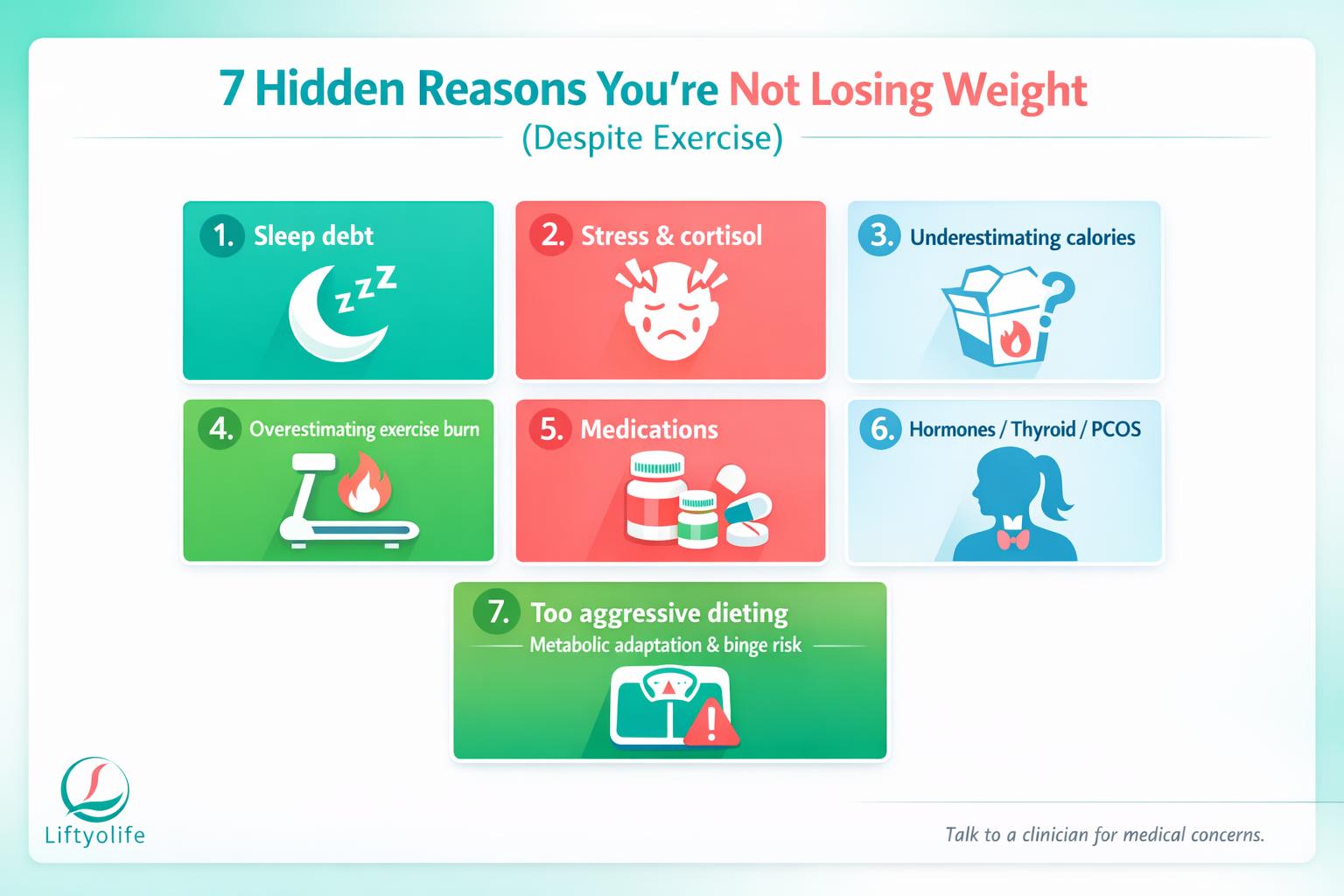
If you are thinking, “I’m already trying,” this section is for you. Often, the issue is not laziness. It is that one or two hidden factors are canceling out your effort.
Hidden cause 1: Too much too soon
What it looks like: You start hard workouts and strict eating at the same time. You feel sore, hungry, and drained. You skip workouts, then feel guilty, then tighten the diet more.
What to do this week: Make the plan repeatable.
- Keep training moderate, not punishing
- Aim for 2 to 3 strength sessions per week
- Add 2 to 4 easy walks for recovery and extra movement
Hidden cause 2: Not enough time yet
What it looks like: You changed habits 7 to 14 days ago and expect daily scale drops. But normal scale noise hides changes.
What to do this week: Give your body time.
- Use a weekly average instead of one weigh-in
- Look for trends over 4 to 6 weeks before changing the plan
- Remember that soreness, salt, and constipation can hide progress
Hidden cause 3: Dieting too aggressively
What it looks like: Constant hunger, low energy, irritability, obsession with food, and “snapping” on weekends. Your body may also reduce spontaneous movement, which is part of metabolic adaptation.
What to do this week: Make the deficit smaller but sustainable.
- Build meals around a clear protein source
- Add fiber-rich carbs and produce so meals feel bigger
- If cravings are extreme, increase calories slightly and stabilize first
Hidden cause 4: Sleep debt
What it looks like: Less than 7 hours most nights, low energy, stronger cravings, and late-night snacking. Research shows sleep restriction can lower leptin and raise ghrelin, which can increase hunger.
What to do this week: Improve your sleep opportunity.
- Set a consistent sleep window
- Add 30 to 60 minutes in bed
- Keep caffeine earlier in the day
Hidden cause 5: Stress and cortisol
What it looks like: Your routine falls apart under pressure. You crave sugar or salty foods, especially at night. You may also drink more alcohol or skip meals then overeat.
Chronic stress can raise cortisol, which is linked with increased appetite and more fat storage around the abdomen over time.
What to do this week: Create one daily “off-ramp.”
- Take a 10-minute walk after dinner
- Try 5 minutes of slow breathing
- Plan a real lunch so evenings are not a hunger emergency
Hidden cause 6: Medications
What it looks like: Weight gain started after a new prescription or a dose change. You feel hungrier, sleepier, or less active.
What to do this week: Make a simple timeline.
- Note start dates and dose changes
- Track appetite, sleep, and weight trend
- Bring the timeline to your prescriber and ask about options
- Do not stop medications abruptly
Hidden cause 7: Hormonal or medical factors
What it looks like: New symptoms appear along with weight gain, such as fatigue, irregular periods, hair or skin changes, or swelling.
What to do this week: Get a focused check.
- Write down your top 5 symptoms and when they started
- Bring medication and supplement list
- Ask what screening labs make sense for your situation
Why the scale won’t budge
A weight loss plateau is normal. As you lose weight, your body needs fewer calories to maintain itself, so the same food and exercise plan can stop creating a deficit.
Here are the big plateau drivers that surprise people:
- Your TDEE is lower now: Smaller body, fewer calories needed
- NEAT compensation: When you diet or train hard, you might unknowingly sit more, move less, and fidget less
- Recomposition: With strength training, you can gain some muscle while losing fat, which makes the scale look flat
- Water shifts: Sodium, travel, constipation, cycle changes, and soreness can increase scale weight temporarily
What to measure instead of daily scale swings
- Weekly average weight
- Waist measurement at the navel
- How clothes fit
- Progress photos every 2 to 4 weeks
- Step count trend and gym performance
If you’re not losing weight despite exercise, the key question is usually not “am I working hard enough?” It is “is my routine actually producing a consistent deficit, and am I measuring progress in a way that can detect it?”
Hormones, metabolism, and genetics
Your body is not a simple calculator. Biology affects hunger, cravings, sleep, energy, and where you store fat. Long-term fat gain still requires a calorie surplus, but biology can make that surplus much easier to slip into.
Leptin and ghrelin: appetite regulation
- Leptin is a hormone that helps signal fullness and longer-term energy status.
- Ghrelin is a hormone that signals hunger.
Sleep restriction can reduce leptin and increase ghrelin, which can raise appetite and cravings. In plain terms, when you are underslept, your brain pushes you to eat more.
Insulin resistance in plain language
Insulin helps move sugar from your blood into your cells. With insulin resistance, your body needs more insulin to get the same job done.
How it can affect weight:
- You may feel hungry again sooner after meals
- Blood sugar swings can increase cravings
- It becomes harder to maintain a steady calorie deficit
Insulin resistance does not mean fat loss is impossible. It usually means the plan needs more structure, especially around protein, fiber, and sleep.
Thyroid basics and hypothyroidism weight gain
An underactive thyroid can contribute to weight gain, often through fatigue and a lower daily burn. It can also cause some fluid retention.
Common symptoms to ask about:
- Fatigue
- Cold intolerance
- Constipation
- Dry skin or hair changes
- Slower heart rate
Clinicians typically check TSH and often free T4 to evaluate hypothyroidism.
PCOS weight gain
PCOS can involve insulin resistance and higher androgen levels.
Possible signs:
- Irregular or absent periods
- Acne
- Increased facial or body hair
- Scalp hair thinning
If this sounds familiar, a clinician may evaluate hormone levels and metabolic markers, then tailor treatment and lifestyle guidance.
Cushing’s syndrome signals
Cushing’s syndrome is uncommon, but it matters because it can cause rapid body changes.
Symptoms that raise concern:
- Fast weight gain in the trunk
- Easy bruising
- Purple stretch marks
- New or worsening high blood pressure
- Proximal muscle weakness
Cushing’s is diagnosed with medical testing, not a symptom quiz.
Genetics and menopause
Genetics can affect appetite and susceptibility to weight gain, but it does not predetermine outcomes. Environment and habits still matter.
In perimenopause and menopause, many people see a shift toward more abdominal fat and less muscle, especially if protein intake and strength training drop. Protecting muscle through resistance training and adequate protein can help support metabolism and function.
Medications that can cause weight gain
If weight changes started soon after a new prescription, you are not imagining it. Some medications can increase appetite, reduce energy, alter blood sugar, or cause fluid retention. Do not stop medication without medical guidance.
| Class | Examples | Why it may happen | What to ask your clinician |
|---|---|---|---|
| Antidepressants | Mirtazapine, paroxetine | Increased appetite | “Any weight-neutral options?” |
| Antipsychotics | Olanzapine, clozapine | Metabolic changes | “How should we monitor labs?” |
| Steroids | Prednisone | Appetite, fluid retention | “Lowest effective dose?” |
| Diabetes meds | Insulin, sulfonylureas | Hypoglycemia eating | “Can dose adjust safely?” |
| Beta blockers | Propranolol | Fatigue, lower NEAT | “Any alternatives for me?” |
| Anticonvulsants | Valproate | Appetite, sedation | “Other options to discuss?” |
| Some antihistamines | Older sedating types | Sedation, appetite | “Non-sedating choice?” |
These classes are commonly listed in clinical references as potential contributors to weight gain, though responses vary by person.
A simple script for your next appointment
- “I noticed weight gain starting around this date.”
- “My appetite, sleep, and energy changed like this.”
- “Are there alternatives with less weight impact?”
- “If not, what can we do to reduce side effects while keeping me safe?”
When weight gain might be medical
Most weight gain is not an emergency, but some patterns deserve a closer look. Use this symptom-led check as a prompt for a real evaluation, not as a diagnosis.
- If you gained weight rapidly in days and have swelling in legs, feet, or around the eyes, think fluid retention. If you also have shortness of breath, seek urgent care.
- If you have fatigue, cold intolerance, and constipation, ask about thyroid testing.
- If you have irregular periods plus acne or new hair growth, ask about PCOS evaluation.
- If you have easy bruising, purple stretch marks, and muscle weakness, ask about Cushing’s testing.
- If you snore loudly and feel sleepy during the day, ask about sleep apnea screening. Treating sleep apnea can improve energy and health.
What clinicians commonly check
Exact testing varies, but common examples include:
- Medical history: weight timeline, diet pattern, activity, alcohol, sleep
- Medication and supplement review
- Physical exam: blood pressure, signs of edema
- Labs such as TSH, A1C or fasting glucose, lipids, and a comprehensive metabolic panel
A simple 7-day baseline audit (no extremes)
If you feel stuck, do not start by cutting more food. Start by collecting clean baseline data for one week. This is about clarity, not judgment.
Track only 4 things for 7 days
Choose one lever to improve next week
What not to do
- Do not crash diet to “make up for it”
- Do not weigh yourself five times a day
- Do not punish yourself with extra workouts
If you want deeper help, Liftyolife’s related guides are optional reading, including types of obesity.
When to see a doctor
Urgent: seek care now
- Rapid weight gain over days with shortness of breath
- Chest pain or pressure
- One-sided leg swelling or calf pain
- Fainting, severe weakness, or confusion
Schedule an appointment
- Persistent weight gain for 3+ months despite consistent habits
- New symptoms such as cold intolerance, constipation, hair changes, or swelling
- Weight change after starting or changing a medication
- Loud snoring, witnessed breathing pauses, or daytime sleepiness
Bring a short timeline: weekly weights, medication changes, sleep changes, and new symptoms.
Frequently Asked Questions
Why am I fat even though I don’t eat much?
You may be eating less than before but still not in a consistent calorie deficit due to portions, snacks, drinks, and weekends. Low sleep and high stress can also raise hunger and lower daily movement. Some medications and medical conditions can increase appetite or cause water retention that hides progress.
Why am I gaining weight all of a sudden?
Fast changes are often water weight from salt, carbs, travel, workout soreness, or hormones. Review any new meds, major stress, sleep loss, or a sudden activity drop. If there is swelling, shortness of breath, chest pain, or rapid gain in days, seek urgent medical care.
Can stress make you gain weight?
Yes. Stress can increase cravings and snacking and often disrupts sleep. Over time, higher cortisol and routine disruption can contribute to more belly-area fat storage. The fix usually combines sleep, routine meals, and stress skills, not harsher restriction.
Which medications cause weight gain?
Common ones include some antidepressants, antipsychotics, steroids, and insulin-related diabetes medications. Do not stop meds suddenly. Ask your clinician about alternatives or mitigation strategies, and track whether weight changes began after a prescription change.
How do I tell if it’s water weight or fat?
Water weight changes quickly, often within 1 to 3 days, and may come with puffiness or tighter rings. Fat gain usually changes slowly over weeks to months and affects measurements and clothes gradually. Persistent swelling or breathing issues needs medical evaluation.
Conclusion
If you’re asking “why am I fat,” the answer is usually not a lack of willpower, it is a mix of energy balance, hidden calorie sources, lower daily movement, sleep and stress effects, and sometimes medications or medical conditions. Focus on a simple 7-day baseline audit, track trends instead of daily scale noise, and get medical input when symptoms or rapid changes suggest something more than lifestyle.
References
- NIH Bookshelf: Obesity – Evidence-based overview of obesity mechanisms.
- Role of nonexercise activity thermogenesis in resistance to fat gain in humans – Foundational NEAT research and variability.
- Sleep restriction and appetite hormones – Review covering leptin and ghrelin changes with sleep loss.