Loose weight diet: what works
Most people searching for a loose weight diet mean a lose weight diet, or a diet plan to lose body fat. The key is not finding the one perfect menu. The key is building meals you can repeat that create a small calorie deficit without leaving you hungry or low on nutrients.
According to the CDC, a common safe pace of weight loss for many adults is about 1 to 2 pounds per week. Slower can still be progress, especially if you are keeping the weight off and feeling better.
At Liftyolife, we focus on practical, plain-language health guidance you can use right away, without extreme rules.
What you will get on this page
- A clear definition of what makes a diet work for weight loss
- A quick-start setup you can follow today
- A 7-day meal plan, plus swaps, a grocery list, and meal-prep shortcuts
Medical note: This article is general education, not personal medical advice. If you have a medical condition, take prescription medications, are pregnant, or have a history of eating disorders, talk with a clinician before making major diet changes.
What is a weight-loss diet? (Definition)
Definition: A weight-loss diet is an eating pattern that helps you lose body fat by creating a calorie deficit while still meeting your needs for protein, fiber, vitamins, and minerals. It focuses on filling foods, steady habits, and realistic portions so you can keep it up long enough to see results.
A calorie deficit means you take in less energy from food and drinks than your body uses in a day. Over time, your body makes up the gap by using stored energy, including body fat.
What to prioritize
- Protein at each meal to support fullness and help you keep muscle while losing weight
- Fiber most days from beans, lentils, oats, fruit, and vegetables
- Minimally processed foods more often than packaged snacks and sweets
- Water and unsweetened drinks as your default
- Sleep and stress basics because poor sleep often increases hunger and cravings
Quick start: 7 steps to set up your diet
You do not need a complicated system. You need a repeatable setup that reduces decision fatigue and makes your meals feel “default healthy.” Here is a simple way to start.
-
- Pick a realistic goal. Start with a goal you can feel, such as better energy, fewer cravings, or looser clothes. If you want a scale goal, aim for the first 5 to 10 percent.
- Choose a safe pace. A common target is 1 to 2 pounds per week for many adults (CDC). If your trend is slower, stay consistent for a few weeks before changing anything.
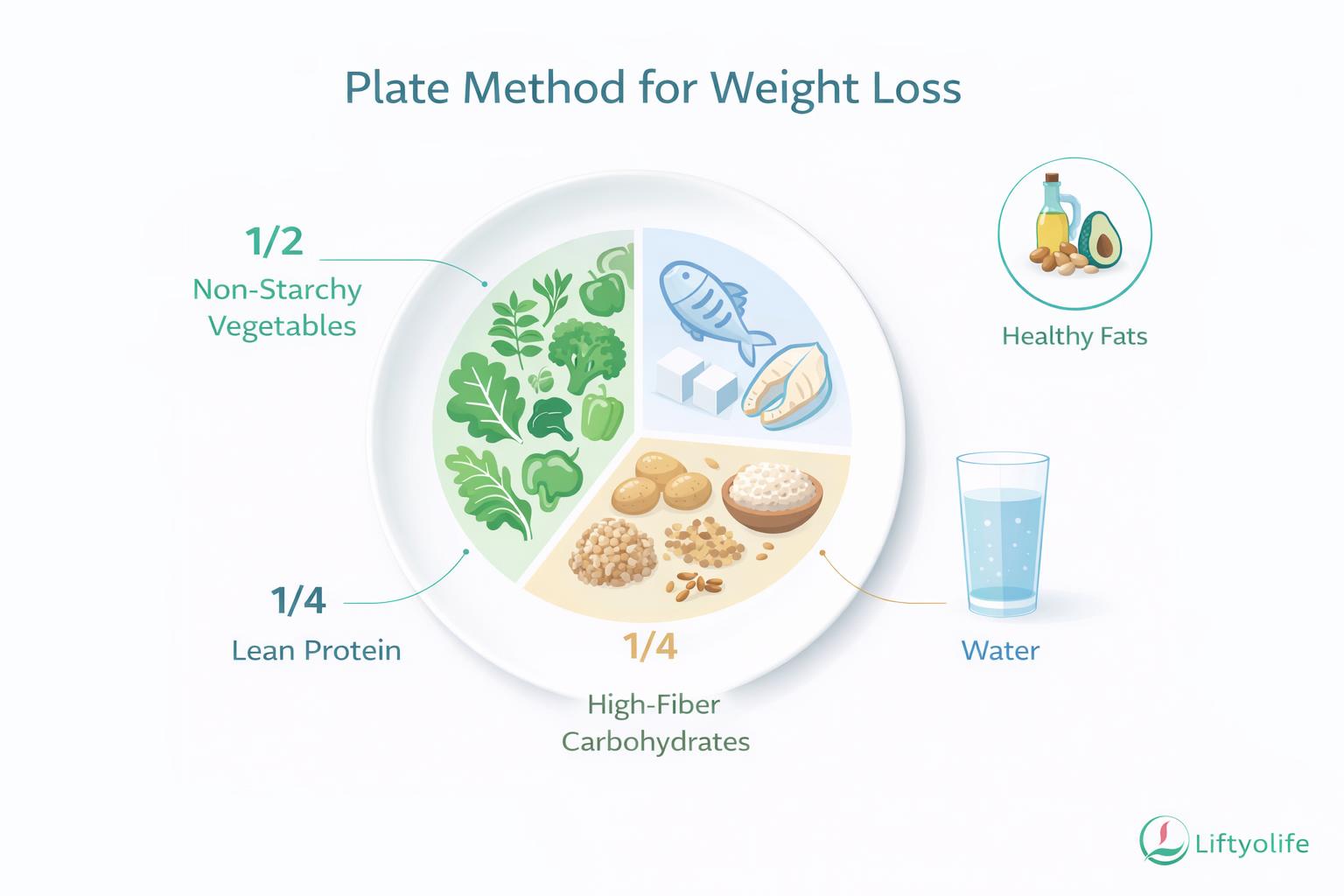
- Use the Plate Method for portions. Build most meals with:
- Half plate non-starchy vegetables
- Quarter plate lean protein
- Quarter plate high-fiber carbs
- A small amount of healthy fat
- Hit a protein anchor at each meal. Examples: eggs, Greek yogurt, chicken, fish, tofu, beans, cottage cheese.
- Add fiber twice a day. Practical add-ons: a cup of berries, a side salad, beans in a bowl, or oats at breakfast.
- Plan 2 repeatable meals plus 2 repeatable snacks. For example, rotate two breakfasts and two lunches you like, then vary dinners.
- Track one thing for 14 days. Choose what you will actually do: steps, meals eaten at home, protein servings, or plate portions.
If you have diabetes or take insulin or sulfonylureas, reducing carbs or skipping meals can increase hypoglycemia risk. Ask your clinician how to adjust food and medication safely.
Best foods to eat to lose weight
The best diet plan to lose weight is not about “superfoods.” It is about choosing foods that give you a lot of fullness per calorie. In practice, that usually means more protein, more fiber, and more volume from vegetables.
If you work at a desk most of the day, the basics still work. You just want easy meals you can pack and repeat. This complements a routine like the one in our desk worker weight loss guide.
Eat more often
- Non-starchy vegetables: leafy greens, broccoli, cauliflower, peppers, mushrooms, zucchini
- Lean proteins: fish, chicken, turkey, eggs, Greek yogurt, cottage cheese, tofu, tempeh, beans, lentils
- High-fiber carbs: oats, quinoa, brown rice, whole wheat pasta, beans, lentils, potatoes with skin, fruit
- Healthy fats: olive oil, nuts, seeds, avocado
- Drinks: water, sparkling water, unsweetened tea, black coffee
Limit (not “never”)
- Added sugars: soda, sweet coffee drinks, candy, many flavored yogurts
- Refined carbs: pastries, white bread, many snack crackers
- Ultra-processed snacks: chips, cookies, energy bars that are mostly sugar
- Alcohol: easy calories plus lower food restraint
- High saturated fat foods: large portions of fatty meats, butter-heavy meals, some fast foods
Quick swap table
| If you usually eat | Try this instead |
|---|---|
| Soda | Sparkling water + lime |
| Sweet latte | Americano + milk splash |
| Chips | Air-popped popcorn |
| Candy | Fruit + nuts |
| White bread sandwich | Whole grain wrap |
| Mayo-heavy tuna | Greek yogurt tuna |
| Fried chicken | Oven roasted chicken |
| Ice cream nightly | Greek yogurt + berries |
| Sugary cereal | Oatmeal + cinnamon |
| Large pasta bowl | Half pasta, add veggies |
7-day weight-loss meal plan
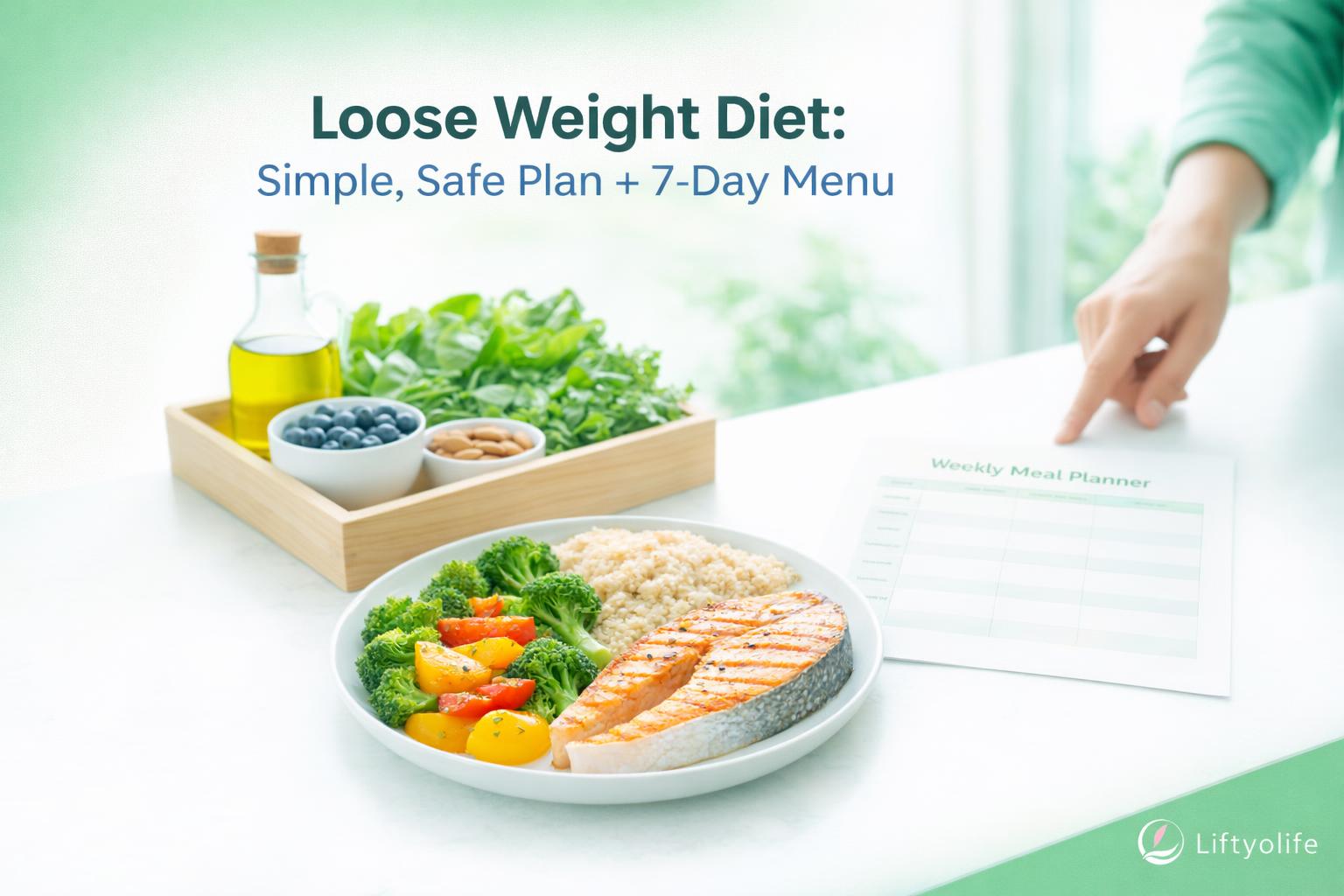
How to use this plan: build portions with the Plate Method, then adjust up or down based on hunger and progress. Repeat days you like. Swap meals within the same “type,” such as swapping one protein-based breakfast for another.
You do not need perfect calorie counting to start. If you prefer calorie targets, begin by learning how a calorie deficit works and avoid extreme cuts. For a deeper explanation, see our guide on cutting calories for weight loss.
If you have food allergies, kidney disease, or a medical diet such as low potassium, get personal guidance before copying a template plan.
| Day | Breakfast | Lunch | Dinner | Snacks |
|---|---|---|---|---|
| 1 | Greek yogurt, berries, chia | Big salad + chicken + olive oil | Salmon, roasted veg, quinoa | Apple + peanut butter; carrots + hummus |
| 2 | Veggie omelet + fruit | Turkey and veggie wrap | Bean chili + side salad | Cottage cheese; air-popped popcorn |
| 3 | Oatmeal + nuts + berries | Lentil soup + side veggies | Chicken stir-fry + brown rice | Hard-boiled eggs; orange |
| 4 | Smoothie: yogurt, spinach, berries | Leftover stir-fry bowl | Turkey burgers, salad, sweet potato | Greek yogurt; nuts |
| 5 | Cottage cheese + pineapple | Tuna salad on greens + whole grain | Tofu or chicken fajita bowl | Edamame; fruit |
| 6 | Overnight oats + chia | Chickpea salad + pita | Pasta: half portion + veggies + shrimp | Protein shake; popcorn |
| 7 | Eggs + sautéed veggies | Leftover chili | Sheet-pan chicken, veggies, potatoes | Dark chocolate square; berries |
Easy swaps
- Vegetarian swaps
- Chicken or turkey to tofu, tempeh, beans, lentils, or eggs
- Greek yogurt to soy yogurt plus a scoop of protein if needed
- Budget swaps
- Salmon to canned salmon, canned sardines, or frozen white fish
- Berries to frozen berries
- Quinoa to brown rice or oats
- Higher-protein swaps
- Use Greek yogurt instead of regular yogurt
- Add extra beans to soups and chili
- Add a side like cottage cheese or edamame
Which diet style fits you?
Different diet styles can work if they help you keep a calorie deficit. The best choice is usually the one you can follow with the least stress and the fewest side effects.
| Diet style | Best for | Foods emphasized | What is hardest | Safety notes | Evidence strength |
|---|---|---|---|---|---|
| Plate method balanced deficit | Most beginners | Veg, protein, whole grains | Portion honesty | Generally safe | Strong |
| Mediterranean | Heart health focus | Olive oil, fish, plants | Planning meals | Oil portions matter | Strong |
| DASH | Blood pressure | Produce, low fat dairy | Sodium habits | Often safe | Strong |
| Lower-carb keto-style | Carb cravings | Meat, eggs, low carb veg | Social eating | Side effects possible | Mixed |
| Intermittent fasting | Simple schedule | Time windows | Hunger timing | Not for everyone | Mixed |
Who should be cautious
- Pregnancy or breastfeeding
- Diabetes on insulin or sulfonylureas
- Kidney disease or gout history
- History of eating disorders
- Frailty or unintentional weight loss in older adults
Common reasons a diet stops working
If you start strong and then stall, it is usually not because your body is broken. It is often one or two hidden habits that quietly erase the deficit.
- Liquid calories add up. Coffee drinks, alcohol, juice, and smoothies can be easy to overdo.Quick fix: switch to unsweetened drinks most days.
- Healthy fats creep higher. Nuts, nut butter, and olive oil are great, but portions matter.Quick fix: pre-portion nuts and measure oil for a week.
- Protein is too low. Low protein often means more snacking.Quick fix: add one palm-sized protein serving at lunch and dinner.
- Fiber is too low. You may feel hungry even on “clean” foods.Quick fix: add beans, oats, berries, or a big salad daily.
- Portion creep. “Just a little more” happens slowly over time.Quick fix: use the Plate Method for 7 days, then reassess.
- Weekend effect. Two higher-calorie days can wipe out five careful days.Quick fix: plan one treat and keep the rest normal.
- Sleep and stress. Poor sleep can increase hunger and cravings.Quick fix: set a simple wind-down routine and a consistent wake time.
- Scale noise. Salt, soreness, and menstrual cycle changes can mask fat loss.Quick fix: track weekly averages, not single weigh-ins.
Quick reset checklist
Safety, medications, and when to talk to a clinician
Gradual changes are safest. Extreme restriction can backfire by raising side effects, increasing binge risk, or interfering with medications.
Check with a clinician first
- Diabetes, especially if you use insulin or sulfonylureas
- Pregnancy or breastfeeding
- Kidney disease, heart disease, or uncontrolled high blood pressure
- History of eating disorders
- Older adults with frailty or recent unintentional weight loss
Stop and seek care if
- Fainting, severe dizziness, or confusion
- Chest pain, shortness of breath, or severe weakness
- Rapid, unplanned weight loss
Disclaimer: If you are concerned about symptoms, seek medical care right away.
Frequently Asked Questions
What is the best lose weight diet?
The best plan is the one you can follow that creates a small calorie deficit and prioritizes protein, fiber, and minimally processed foods. Mediterranean and DASH-style patterns work well for many people. Your best option also depends on your medical history, medications, and preferences.
How many calories should I eat to lose weight?
Many people lose weight with a modest deficit instead of extreme restriction. Your needs depend on age, sex, body size, and activity. If you have diabetes, are pregnant, or have a history of eating disorders, ask a clinician for a safe target.
What should I eat for breakfast to lose weight?
Aim for protein plus fiber, such as eggs with vegetables, Greek yogurt with berries, or oatmeal with nuts. Avoid liquid breakfasts that are mostly sugar. Pick two breakfasts you can repeat to make mornings easier.
Can I lose weight without exercise?
Yes, diet usually drives the calorie deficit. Exercise helps you keep muscle, improve health markers, and maintain weight loss. If you are able, start with walking and basic strength work.
How fast can I lose weight safely?
A common safe pace is about 1 to 2 pounds per week for many adults (CDC). Faster loss can increase side effects and regain risk. People in larger bodies may lose faster early on, but trends matter more than day-to-day scale changes.
“Loose weight diet” vs “lose weight diet”, is there a difference?
Most people mean lose weight diet, not a different plan. “Loose weight” is a common spelling mistake. The best approach is still safe, sustainable fat loss, not crash dieting.
References
- CDC: Losing Weight – Guidance on healthy, sustainable weight loss and safe habits.
- NHLBI: Healthy Weight – Practical goals like 5 to 10 percent over about 6 months.
Conclusion
A sustainable diet plan to lose weight is built on a modest calorie deficit, protein and fiber at most meals, and simple meals you can repeat. Use the 7-day menu as your starting point, adjust portions to your hunger and progress, and focus on steady changes you can keep for months, not days.