Fat Reason: the quick answer
A fat reason is usually not one single mistake. Most body fat gain happens when you take in a bit more energy than you use for long enough, and your body stores the extra as fat. Stress, sleep loss, ultra-processed foods, and some medications or health conditions can make that surplus happen without you noticing.
At Liftyolife, we explain fat gain in plain English without blame.
Here are the most common fat reason patterns:
- A small calorie surplus repeating daily
- More ultra-processed foods and snacks
- Liquid calories like soda or sweet coffee
- Less daily movement from a NEAT drop
- Poor sleep that increases hunger
- Stress eating and comfort-food habits
Safety note: this is general information, not a diagnosis.
First, confirm: fat gain or something else?
Before you go hunting for the reasons for gaining body fat, confirm you are not blaming “fat” for normal scale changes.
Body weight is everything on the scale: fat, muscle, water, food in your gut, and stored carbs called glycogen. Body fat is only one part of that. This is why you can “gain weight” in two days without gaining meaningful fat.
Common non-fat reasons the scale jumps:
- Water retention from salty meals, travel, or dehydration rebound
- Glycogen changes after higher-carb eating or after restarting workouts
- Constipation or slower digestion
- Inflammation and soreness after hard exercise
- Menstrual cycle shifts and other hormonal changes
Practical tracking that keeps you sane:
- Weigh under the same conditions: after bathroom, before food, similar clothing
- Look at a 7 to 14 day trend, not one day
- Measure your waist once weekly and notice clothing fit
Table A: Weight gain vs fat gain
| Change | How fast it happens | Common clues | What helps |
|---|---|---|---|
| Water weight | Hours to days | Puffy, bloated | Hydrate, lower salt |
| Glycogen weight | 1 to 3 days | After carbs, workouts | Keep routine, trend |
| Constipation | Days | Fullness, irregular | Fiber, fluids, walking |
| Inflammation | 1 to 4 days | Sore, swollen muscles | Rest, light movement |
| Fat gain | Weeks | Steady upward trend | Reduce surplus, habits |
Emotional eating: the brain trap (not “weakness”)
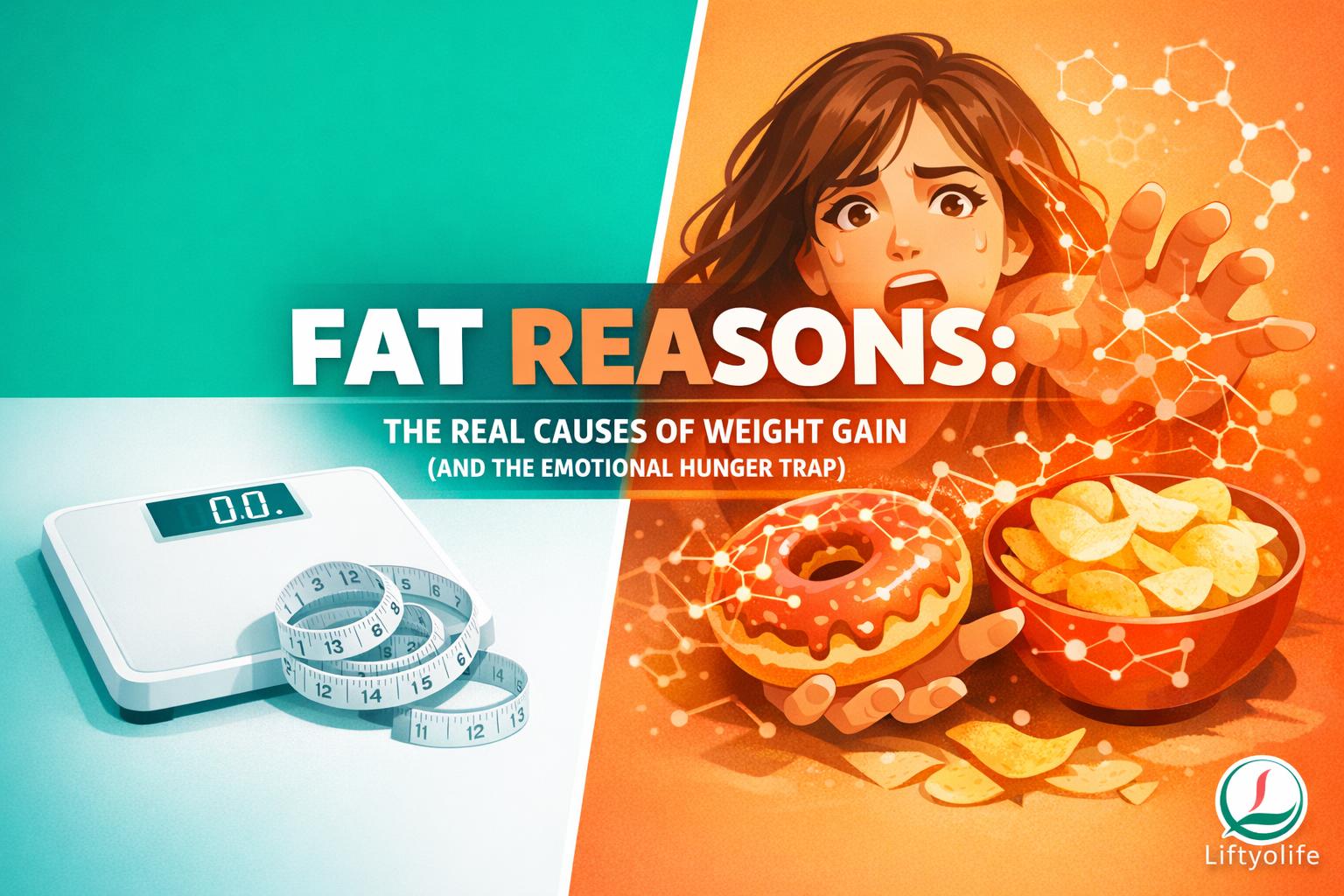
If you keep telling yourself the fat reason is “I am just weak”, stop. Emotional eating is often a brain-protection move. When you feel stressed, lonely, anxious, or overwhelmed, your brain looks for quick relief. Highly tasty foods provide it fast.
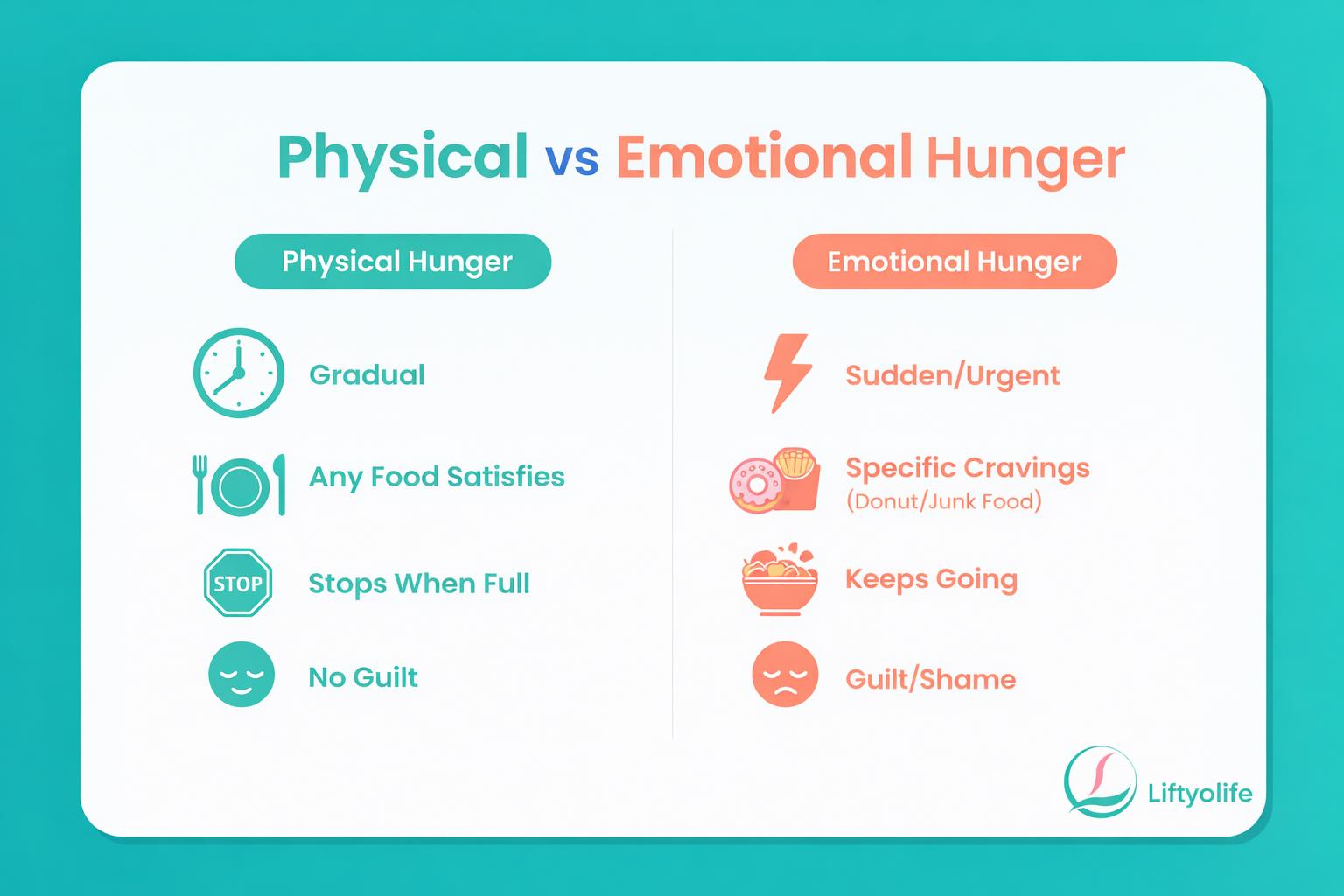
Physical hunger vs emotional hunger is one of the fastest ways to spot emotional eating and weight gain loops.
In plain language, your dopamine reward system helps you learn what feels good and what to repeat. Under stress and poor sleep, reward-seeking can rise, and comfort foods can feel more tempting in the moment.
This gets amplified by ultra-processed foods. They are designed to be hyper-palatable and easy to eat quickly, and they pack a lot of calories into small amounts of food. In practice, this means your fullness signals can show up after you already overshot what your body needed.
Signs it is emotional hunger:
- It hits suddenly, like a switch
- You crave a specific food, not “food”
- You want to eat even if you recently ate
- You feel numb, wired, or restless first
- You eat faster than normal
- You feel guilt, shame, or “Why did I do that?” after
Signs it is physical hunger:
- It builds gradually
- Many foods sound good
- You notice stomach cues, low energy, or irritability
- You can wait 20 to 30 minutes
- You feel satisfied and steady after eating
Why stress + poor sleep can make fat gain easier
Stress and sleep problems do not magically create fat from nothing. But they can make a calorie surplus feel automatic.
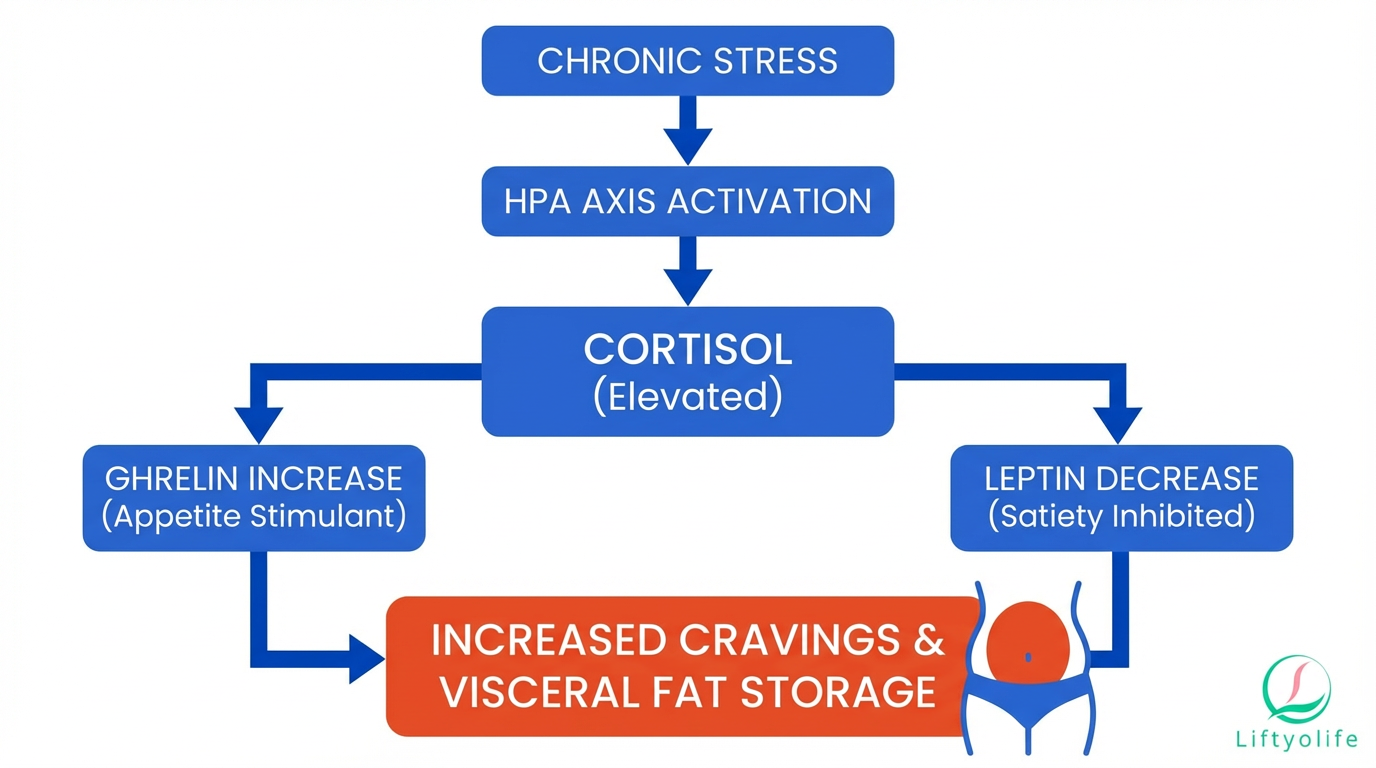
Here is the common chain:
- You get stressed or overbooked.
- Cortisol and adrenaline rise to keep you alert.
- Your brain wants quick reward, so cravings increase.
- You snack, often on sugar, salt, and fat combos.
- Sleep gets shorter or lighter.
- Research links short sleep with appetite hormone shifts that can increase hunger and reduce satiety over time. For example, studies associate short sleep with higher ghrelin and lower leptin signals (PLOS Medicine, PubMed).
Reality check
Calories still matter. The key point is that stress and sleep deprivation make it easier to eat more and move less without noticing.
You will also hear a lot about belly fat here. Visceral fat is the deeper fat around organs, and it is linked with higher cardiometabolic risk. Stress can also push people toward alcohol, late-night eating, and less activity, which often shows up around the midsection.
The full list: 17 common reasons people gain body fat
You might have one big driver, or several smaller ones stacking up. Read this like a checklist, not a judgment.
1) Calorie surplus over time
A calorie surplus means you consistently eat more energy than you burn. Even a small daily surplus can add up over months.
2) Ultra-processed foods and hyper-palatable eating
These foods are easy to overeat because they are calorie-dense and often low in filling fiber and protein. If your pantry is built around them, fat gain becomes the default outcome.
3) Liquid calories
Soda, juice, alcohol mixers, and sweet coffee drinks can add hundreds of calories without making you feel full.
4) Alcohol plus late-night eating
Alcohol can lower inhibition and increase appetite. Late eating also tends to be snack food, not balanced meals.
5) Low protein and low fiber meals
Protein and fiber help you feel full and steady. If meals are mostly refined carbs and fats, hunger often returns fast.
6) Low daily movement and NEAT drop
NEAT stands for non-exercise activity thermogenesis. If you sit more, stop pacing, or take fewer steps, your daily calorie burn drops even if you still “work out”.
7) Inconsistent sleep schedule
Even if your total hours look okay, constantly shifting bedtime and wake time can disrupt appetite, cravings, and routine.
8) Chronic stress and emotional eating loop
Stress can increase comfort-food cravings and reduce planning. Over time, this creates a consistent surplus and a strong habit loop.
9) The weekend overeating pattern
A strict weekday plan plus big weekends can erase progress quickly. Two restaurant meals, drinks, and snacks can outpace five “good” days.
10) Underestimating portions and mindless snacking
Bites, tastes, handfuls, and “just finishing the kids’ plate” count. So do calorie-dense “healthy” extras like nuts, oils, and granola.
11) Aging plus muscle loss
As you age, you often lose muscle and move less unless you train for it. Less muscle can mean lower energy needs, so old portions can become a surplus.
12) Genetics and family environment
Genetics influence appetite, satiety, and where you store fat. Your environment shapes portions, food availability, and norms around eating.
13) Hypothyroidism
Hypothyroidism means your thyroid is underactive. Common clues include fatigue, cold intolerance, constipation, dry skin, and slowed heart rate. Diagnosis often starts with a blood test for TSH, and may include free T4 (Mayo Clinic, Cleveland Clinic).
14) Cushing syndrome red flags
Cushing syndrome is excess cortisol in the body, often from steroid medication or a hormone issue. Red flags include rapid central weight gain, round face, thin skin, easy bruising, and wide purple stretch marks (NIDDK, Cleveland Clinic).
15) PCOS
Polycystic ovary syndrome is often linked with insulin resistance, which can contribute to weight gain for many people. It can also involve irregular periods, acne, and excess hair growth (NIDDK).
16) Sleep apnea
Sleep apnea breaks sleep and can worsen daytime fatigue and cravings. Loud snoring and choking or gasping at night are common signs (CDC). Extra weight can also make sleep apnea more likely, so it can become a cycle.
Some medications can increase appetite, change metabolism, or cause fluid retention. Common categories include corticosteroids, some antipsychotics, some antidepressants, some seizure medications, and some diabetes medicines. Never stop a prescription suddenly. Ask your clinician about alternatives, dose changes, or monitoring.
Table B: Cause -> typical signs -> what to check -> when to see a clinician
| Cause | Typical signs | What to check | When to see a clinician |
|---|---|---|---|
| Portion creep | Same foods, more | Measure 1 week | If still confused |
| Liquid calories | Drinks most days | Track beverages | If hard to cut |
| Low protein | Hungry soon | Add protein | If cravings severe |
| NEAT drop | Sitting more | Step count | If fatigue sudden |
| Sleep loss | Cravings, naps | Sleep schedule | Snoring, gasping |
| Stress eating | Specific cravings | Trigger log | Loss of control |
| Hypothyroidism | Cold, tired | TSH, free T4 | New symptoms |
| Cushing signs | Purple striae | Med review | Rapid changes |
| PCOS | Irregular cycles | Cycle history | Fertility concerns |
| Medication effect | Timeline matches | Med list | Before changing meds |
What to do next: a simple, non-shaming reset plan
Do not try to fix everything at once. Run this for 7 days. The goal is to calm cravings, tighten your routine, and reveal your biggest lever.
- Pick one wake time and keep it, even on weekends. Aim for 7 to 9 hours in bed.
- Add steps: find your baseline, then add 1,000 steps per day.
- Protein plus fiber at two meals/day: think eggs plus fruit, Greek yogurt plus berries, chicken plus salad, beans plus veggies.
- Swap one liquid-calorie drink/day for water, unsweetened tea, or another low-calorie option.
- Use a 2-minute pause before cravings: stop, breathe, name the feeling, then decide.
- Do a 5-minute stress off-ramp: a short walk, stretching, or slow breathing.
- Design your environment: put trigger foods out of sight, make healthier foods the easy option.
A quick CBT-style interruption that actually works in real life:
- Trigger: What happened right before the craving?
- Emotion: Name it in one word.
- Choice: Pick one alternative action for 10 minutes.
When to track food, and when not to:
- Track for a short window if you feel confused and want clarity.
- Skip tracking if it increases anxiety or obsessive thinking. Use simple defaults instead, like protein at meals and fewer liquid calories.
If you want to go deeper, Liftyolife has guides on stress belly fat, sleep deprivation, depression, and types of obesity.
Get help if…
- You gain weight rapidly over a few weeks without a clear reason
- You recently started, stopped, or changed a medication
- You have symptoms of hypothyroidism or Cushing syndrome
- You suspect sleep apnea, especially loud snoring and gasping
Frequently Asked Questions
Why am I getting fat even though I don’t eat much?
Portion sizes, snacks, and drinks often add up more than you think, especially when stress and sleep loss increase cravings. Some medications and conditions can also contribute. If it is new, rapid, or confusing, ask a clinician to review meds, sleep, and basic labs.
Can stress really make you gain belly fat?
Chronic stress can keep cortisol higher, which may increase appetite and comfort-food cravings. Stress also disrupts sleep and routines, making a calorie surplus easier. Belly-fat gain is usually a mix of hormones, habits, and total calories over time.
What medications commonly cause weight gain?
Corticosteroids like prednisone, many atypical antipsychotics, and some antidepressants can increase appetite. Some diabetes medicines such as insulin, sulfonylureas, and TZDs, plus some seizure medicines like valproate, can also contribute. Do not stop a medication suddenly. Ask about alternatives and monitoring.
How do I know if it’s thyroid weight gain?
Hypothyroidism often comes with fatigue, cold intolerance, constipation, dry skin, and slowed heart rate. Weight gain is often modest but can feel stubborn. A blood test, usually TSH and sometimes free T4, can help confirm (Mayo Clinic, Cleveland Clinic).
How fast can you gain body fat?
Fat gain depends on the size and consistency of your calorie surplus, so it usually shows up as a steady upward trend over weeks. Rapid scale jumps over days are more often water, glycogen, salt, or constipation. If you gain quickly without explanation, consider medication changes or medical evaluation.
Am I gaining fat or just water weight?
Water weight changes quickly and can swing by several pounds in a few days due to salt, carbs, hormones, and soreness. Fat gain is slower and trends upward over weeks. Use consistent weigh-ins plus a 7 to 14 day trend, waist measurements, and clothing fit.
Conclusion
Most “fat reason” stories are really a loop: stress and poor sleep raise cravings, ultra-processed foods make overeating easy, and daily movement quietly drops. Track trends instead of daily scale noise, then run a simple 7-day reset built around sleep, steps, protein, and a short craving pause to break the loop safely.
References
- Sleep loss increases hunger and appetite signals – Human study on ghrelin and hunger during sleep deprivation.
- Short sleep associated with ghrelin and leptin changes – Population study linking sleep duration to appetite hormones.
- Cushing’s syndrome overview and symptoms – NIH resource on signs and causes.
- Hypothyroidism diagnosis and lab testing – Includes TSH and free T4 testing.
- Hypothyroidism symptoms and basics – Symptom overview and evaluation.
- Polycystic ovary syndrome overview – PCOS background and common features.
- Sleep apnea overview – Symptoms, risks, and why evaluation matters.