
Mar 18, 2026
Weight Loss: 7 Safe Steps + 7 Chair Exercises (Desk Job)
March 22, 2026
Diet & Weight management

If you are 35+, working a 9-5 desk job, and trying to make weight loss happen without feeling drained or overwhelmed, this page is built for you. This guide from Liftyolife explains a simple, medically cautious plan: the few food and movement habits that matter most, plus chair exercises you can do between meetings.
You will learn how to lose weight safely with a modest calorie deficit, meals that keep you full, and small activity boosts (NEAT) that actually fit office life.
Contents
show
What is weight loss?
Weight loss is a decrease in body weight over time that happens when you consistently use more energy (calories) than you take in. Because the scale also reflects water, glycogen, and food in your digestive tract, short-term changes do not always equal body fat loss. A calorie deficit is the gap created when you burn more calories than you eat, on average.
- Scale weight vs. fat: A salty meal, soreness from exercise, or a menstrual cycle can temporarily raise scale weight even if body fat is decreasing.
- Calorie deficit (one-line): You lose fat when intake stays below expenditure over days and weeks, not hours.
- The practical takeaway: Use trends like weekly averages, waist size, and how clothes fit, rather than single weigh-ins.
Key takeaways
- Aim for a gradual pace. Many public-health guidelines commonly cite about 1-2 lb/week for many adults, but your safest target depends on your health and medications (CDC, Nutrition.gov).
- The biggest lever is a consistent calorie deficit. You usually get it fastest by improving portion control and reducing ultra-calorie-dense extras.
- Protein and fiber make it easier. They support fullness and help protect muscle while dieting.
- Strength training preserves lean mass. Two short full-body sessions per week can make a big difference.
- Boost NEAT during the workday. Small movement breaks can meaningfully increase daily energy burn over time.
If you only do 2 things this week:
- Build two meals per day around protein + fiber.
- Add two 3-5 minute movement breaks during your workday.
Why desk jobs make weight loss harder
A desk job often means hours of sitting, which is sedentary behavior. Even if you work out before or after work, being seated most of the day can lower your daily calorie burn and make a calorie deficit harder to maintain.
What’s going on:
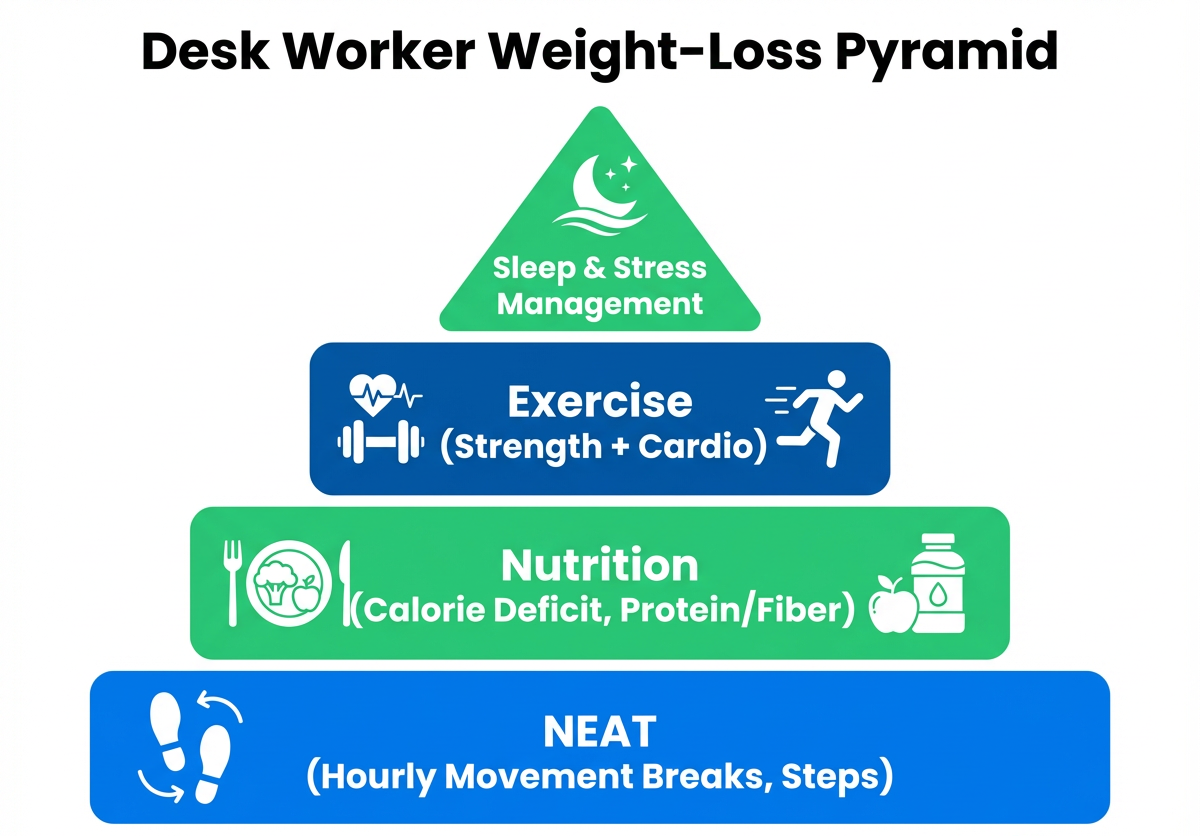
- Lower daily energy burn: NEAT (non-exercise activity thermogenesis) is the energy you use for everything that is not formal exercise. Less standing, walking, and fidgeting can reduce total daily expenditure.
- Cardiometabolic risk: Research links more sedentary time with higher risk markers for type 2 diabetes, cardiovascular disease, and all-cause mortality (large reviews in NCBI/PMC).
- Musculoskeletal pain: Prolonged sitting is commonly associated with neck tension, shoulder discomfort, and low back pain, which can make you move less and avoid exercise.
What helps (low-effort countermeasures that fit a 9-5):
- Movement snacks: Take 2-5 minutes of light movement every 60-90 minutes.
- Chair routine: Use the 7 chair exercises below as your default break because they support NEAT and reduce stiffness.
- Short walks: Try a 10-minute walk after lunch, or two 5-minute walks split across the day.
- Simple strength sessions: Two 20-30 minute full-body workouts per week protects muscle and makes maintenance easier.
If you want more ideas for increasing daily movement, see the NEAT section in How To Lose 10 Kg In A Month? and the desk-friendly walking baseline examples in Fat Diseases: 10 Types, Tests & Proven Fixes.
How to lose weight safely: 7 steps you can start this week
- Set a realistic target and timeline using weekly trends, not daily scale changes.
- Create a modest calorie deficit you can repeat most days without feeling exhausted.
- Build meals for fullness by pairing protein, fiber, and high-volume foods.
- Choose a diet style you can stick to and that matches your office routine.
- Move daily (NEAT) and strength train to increase energy burn and protect muscle.
- Protect sleep and manage stress so appetite and cravings are easier to handle.
- Plan for maintenance early by practicing forever habits before you reach your goal.
Here is how to make each step practical in a desk-worker schedule.
Step 1: Set a target you can repeat.
A realistic timeline is the one you can follow for months, not a sprint you quit after two weeks. Many guidelines commonly cite a gradual pace, often around 1-2 lb/week, for many adults (CDC, Nutrition.gov), but your safest pace depends on your health, starting weight, and medications. Use at least one trend marker:
- Scale trend: weigh 3-7 times/week, track a weekly average
- Waist: measure monthly at the same time of day
- Real life: belt notch, how clothes fit, energy levels
Step 2: Create a modest calorie deficit.
You can track calories, but you do not have to. Most desk workers get the biggest bang for effort from removing calorie-dense friction points:
- Replace sugary drinks with water, sparkling water, or unsweetened tea
- Shrink invisible calories: cooking oils, creamy coffee drinks, frequent grazing
- Use portions that match your day: if you sit most of the day, you often need less than you think
If you do track, be especially honest with:
- Oils and dressings
- Nuts and nut butters
- Alcohol
- Just a bite foods because they add up
Step 3: Build meals for fullness (protein + fiber + volume).
Most people fail a weight loss plan when hunger is too high. Make fullness automatic by building meals from:
- Protein: Greek yogurt, eggs, chicken, fish, tofu, beans, cottage cheese
- Fiber: berries, beans, lentils, oats, vegetables, whole grains
- High-volume foods: soups, salads, stir-fries, roasted vegetables, fruit
Two office-friendly examples:
- Breakfast: Greek yogurt + berries + a handful of high-fiber cereal
- Desk lunch: big salad kit + added protein (chicken, tuna, tofu) + a piece of fruit
Step 4: Pick a diet style you’ll actually follow.
The best diet plan for weight loss is the one you can do on a boring Wednesday when you are stressed and busy. If lunch is usually eaten at your desk, a perfect plan that requires cooking at noon will fail. Choose a structure that matches your reality.
Step 5: Move in layers: NEAT first, then strength, then cardio.
For desk workers, the easiest win is usually NEAT. A couple movement snacks per day can help you maintain a calorie deficit without feeling like you need longer workouts. Then add strength training to protect muscle while dieting. Finally, layer in cardio you enjoy such as walking, cycling, or swimming.
Step 6: Protect sleep and manage stress.
Sleep and stress do not break energy balance, but they can make adherence harder by increasing hunger, cravings, and fatigue. Two simple actions:
- Keep a consistent sleep window even on weekends
- Create a 10-minute wind-down routine with dim lights, stretching, or reading
Step 7: Plan for maintenance early to prevent regain.
Maintenance is not a separate later phase. Start rehearsing it now:
- Pick 1-2 default breakfasts and lunches you can repeat
- Decide what good enough movement looks like on a busy day
- Plan for weekends, which is often where calorie intake quietly jumps
- Keep strength training in your plan, not just cardio
A realistic 7-day starter plan for desk workers
The minimum effective dose is the smallest set of actions that reliably moves you forward. For desk workers, that usually means a few food upgrades that reduce calories without constant hunger, plus small daily movement that adds up.
| Day | Food focus | Movement focus | Tracking |
|---|---|---|---|
| Day 1 | Protein-forward breakfast | 2 chair breaks + 10-min walk | Baseline weight + waist |
| Day 2 | Add fruit/veg to lunch | 2 chair breaks + steps | Steps estimate |
| Day 3 | Pack a high-protein snack | Strength workout A | Note hunger level |
| Day 4 | Water or zero-cal drinks | 2 chair breaks + 10-min walk | Sleep hours |
| Day 5 | Build a “default” lunch | Strength workout B | Weekly avg weight |
| Day 6 | Meal prep 2 lunches | Longer walk (20 min) | Protein check |
| Day 7 | Plan 2 meals for next week | Light chair circuit | Review wins |
Print this: Screenshot the table, or copy it into a note and check off each day. If you miss a day, resume the next meal. No restarting required.
7 chair exercises you can do at your desk
You should feel gentle effort or a stretch, not sharp pain, numbness, tingling, or dizziness. Move slowly, breathe, and stop if symptoms worsen.
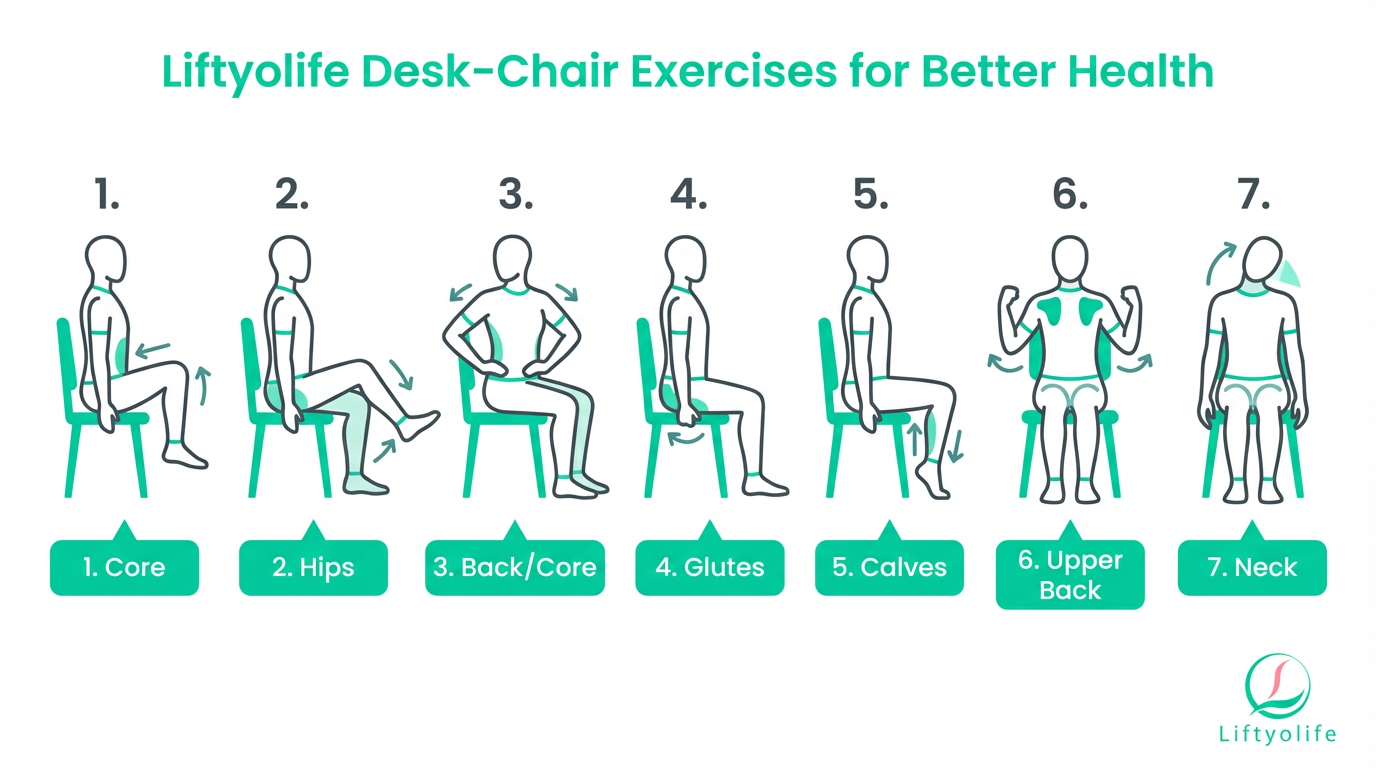
1) Seated march
- What it helps: Light cardio and circulation. This turns dead sitting time into a small NEAT boost.
- How to do it: Sit tall near the front of your chair, feet flat. Brace your core lightly. Lift one knee a few inches, lower with control. Alternate legs like marching.
- Time/reps: 30-60 seconds, 1-3 rounds.
2) Seated knee lifts
- What it helps: Hip flexors and core activation. Helpful if you feel stuck in your hips after long sitting.
- How to do it: Sit tall, hands gripping the sides of the chair. Lift one knee toward your chest. Lower slowly, then switch sides.
- Time/reps: 8-12 reps per side, 1-2 sets.
3) Seated torso twist
- What it helps: Gentle spinal mobility and a posture reset from slumping.
- How to do it: Sit tall with feet planted. Cross arms over your chest. Rotate your ribcage to the right slowly. Return to center, then rotate left.
- Time/reps: 6-10 slow reps per side.
4) Seated shoulder blade squeeze
- What it helps: Upper back activation for posture. It counters the rounded keyboard posture that makes desk workers feel tight.
- How to do it: Sit tall, arms relaxed by your sides. Pull shoulder blades down and back. Hold briefly, then relax fully.
- Time/reps: 10-15 reps (hold each rep 2-3 seconds).
5) Seated neck stretch
- What it helps: Neck tension from screen time.
- How to do it: Sit tall and let shoulders drop. Gently tilt your head so your right ear moves toward your right shoulder. Hold, breathe, and repeat on the other side.
- Time/reps: 20-30 seconds per side.
6) Seated glute squeeze
- What it helps: Glute activation when your hips feel asleep from sitting.
- How to do it: Sit tall with feet flat. Squeeze your glutes as if you are holding a coin between them. Relax fully between reps.
- Time/reps: Hold 5 seconds x 10 reps.
7) Seated calf raises
- What it helps: Lower-leg pump and ankle mobility during long sitting stretches.
- How to do it: Sit tall with feet flat. Press the balls of your feet into the floor and lift heels up. Pause, then lower slowly.
- Time/reps: 15-25 reps, 1-3 sets.
Diet strategies compared
| Strategy | What it emphasizes | Who it may fit | Office-friendly tip |
|---|---|---|---|
| Calorie deficit basics | Portions, energy balance | Beginners | Pre-portion snacks |
| Mediterranean-style | Veg, olive oil, fish | Heart-health focus | Pack salad + protein |
| Higher-protein | Protein each meal | High hunger | Add beans or berries |
| Lower-carb | Fewer starches/sugars | Some with cravings | Keep easy proteins |
| Portion-controlled plan | Set menus/containers | Busy schedules | Rotate 3 go-to lunches |
Exercise for weight loss
For most adults, exercise supports weight loss best when it is used to protect muscle, increase daily movement, and improve long-term maintenance. If you are 35+, joint comfort and consistency matter more than perfect programming.
Strength training for weight loss: your muscle-protection plan
Strength training helps preserve lean body mass during a calorie deficit. Practically, it helps you keep strength for everyday tasks and makes your body composition change more favorably as the scale goes down.
A beginner-friendly approach involves 2 days per week of full-body work, focusing on basic moves like squats, hinges, pushes, and pulls. Start light enough to keep good form and recover well.
If you want more context on adjusting training when progress slows, see How Long Does A Weight Loss Plateau Last? for ideas on varying your routine.
Cardio for beginners: pick the joint-friendly option
Cardio can increase calorie burn and improve fitness, but the best choice is the one you can do consistently without pain. Good options include walking, cycling, swimming, or using the elliptical. Start with a pace where you can talk in short sentences.
Troubleshooting: why weight loss stalls
Weight loss stalls are common, especially once your body weight is lower. Most plateaus are not failure, they are feedback that something shifted, such as portions, movement, or water retention.
Plateau checklist:
- Use 2-4 week averages, not daily weight. If your weekly average is still trending down, you are not stalled.
- Track intake for 7-14 days, including weekends. Many plateaus are simply untracked weekends.
- Audit the biggest calorie traps first. Liquid calories, oils, and restaurant meals are common.
- Add a small activity bump. Add one 10-minute walk 4 days/week.
- Increase protein and fiber at 1-2 meals. This helps reduce hunger when you tighten portions.
Safety first: when to get medical advice
Talk to a clinician first if you:
- Are pregnant or postpartum
- Have a history of eating disorders
- Use diabetes medicines or have frequent low blood sugar
- Have heart, kidney, or liver disease
- Have rapid, unexplained weight loss
FAQ
How much weight can you lose safely in a week?
Many guidelines commonly cite a gradual pace, often around 1-2 lb/week, as a reasonable target for many adults. Faster loss may increase fatigue and raise the risk of muscle loss.
Is it better to diet or exercise for weight loss?
Nutrition usually drives the calorie deficit more directly, while exercise helps preserve muscle and supports long-term health. Best results typically come from combining both.
Can you lose weight with a desk job?
Yes. Focus on food quality and portions plus small movement boosts (NEAT) throughout the day. Add short chair-based exercise breaks and a simple strength routine.
References and Update History
Last updated: 2025-12-19
- CDC Healthy Weight: Losing Weight
- Nutrition.gov: Strategies for Success
- NIH/NCBI Bookshelf: Obesity Education Initiative
Conclusion
Safe, sustainable weight loss for desk workers comes down to a modest calorie deficit you can repeat, protein and fiber for fullness, and daily movement that fits your schedule. Start with the minimum effective dose: two chair breaks, a short walk, and two weekly strength sessions. Adjust based on 2-4 week trends rather than day-to-day scale changes.
MAYBE YOU LIKE
See All