What you’ll learn:
- The caffeine limit 400 mg per day guidance and what that looks like in coffee cups
- A coffee-by-type caffeine table (so you can translate cups to mg)
- A simple, realistic cut-back plan that helps you avoid headaches
Intro: Is too much coffee bad?
Coffee isn’t automatically “bad,” and you don’t need to feel guilty for enjoying it. The real issue is whether your dose, timing, and sensitivity turn coffee into a sleep disruptor or a symptom trigger.
Most people want two clear answers: how much coffee is too much, and whether their jitters, anxiety, stomach issues, or palpitations could be from caffeine. We’ll cover both with practical tools you can use today.
This Liftyolife guide is part of our health education content, focused on calm, evidence-led choices.
Quick Answer: How much coffee is “too much”?
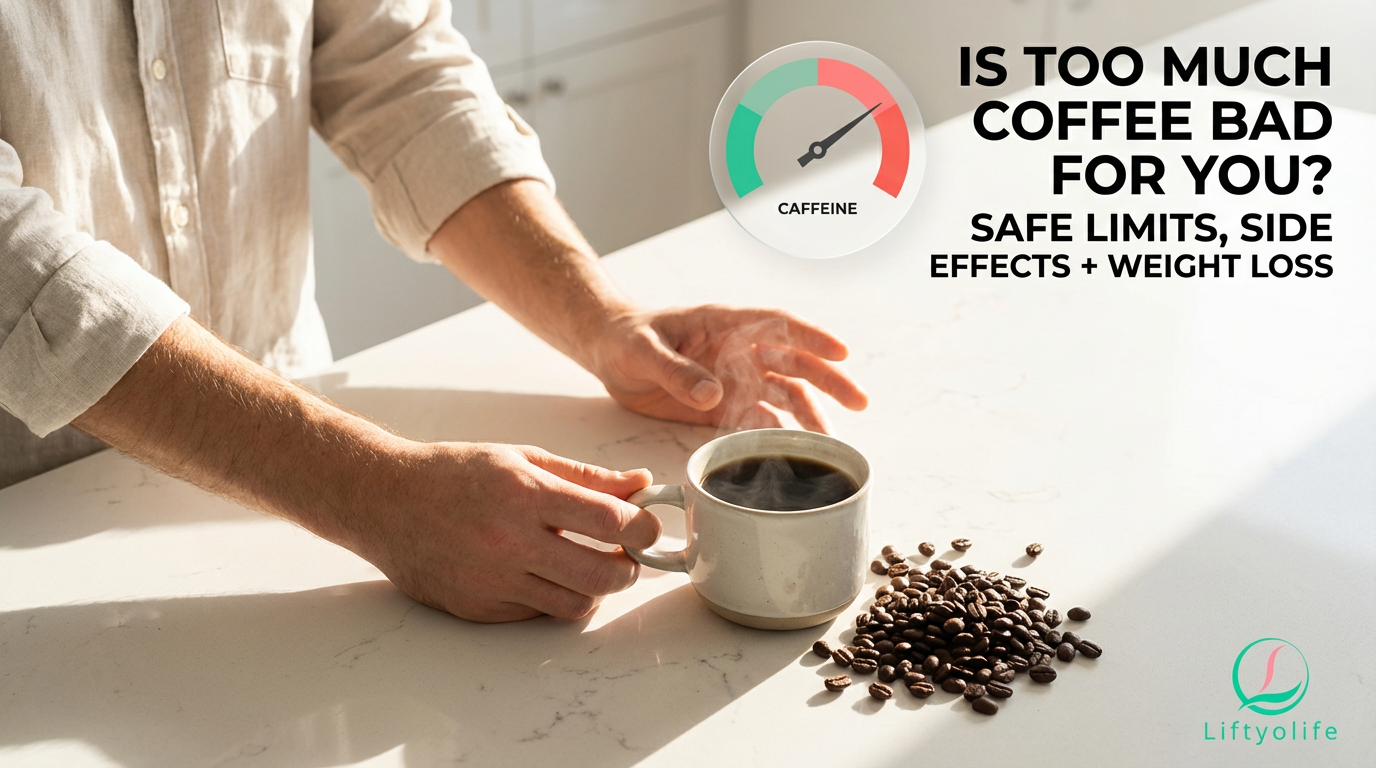
Too much coffee usually means enough caffeine to cause unwanted symptoms or enough to exceed common safety guidance. For most healthy adults, the FDA says up to 400 mg caffeine/day is not generally associated with dangerous, negative effects, which is often about 4 cups of 8 oz brewed coffee. If you get symptoms, your personal limit may be lower.
Definition: Too much coffee = (1) coffee that causes symptoms for you, or (2) coffee that pushes you above recommended caffeine limits.
Key numbers to know:
- Most healthy adults: up to 400 mg/day caffeine (FDA)
- Pregnancy: many clinicians recommend 200 mg/day (ACOG)
- Concentrated caffeine powders/liquids: higher overdose risk (FDA)
- Caffeine half-life: about 5 hours on average, but varies widely (NIH)
- If you feel “too much coffee side effects,” treat that as your real limit even if you’re under 400 mg
One more reality check: “4 cups” assumes 8 oz cups. Many mugs are 12 to 20 oz, and extra espresso shots or cold brew can quietly push you over.
Caffeine in coffee: mg by type (and why it varies)
Caffeine in coffee can swing a lot. It depends on bean type, roast, grind, brewing time, water-to-coffee ratio, and serving size. Cafe drinks vary even more because the same menu item can have a different number of shots depending on the shop.
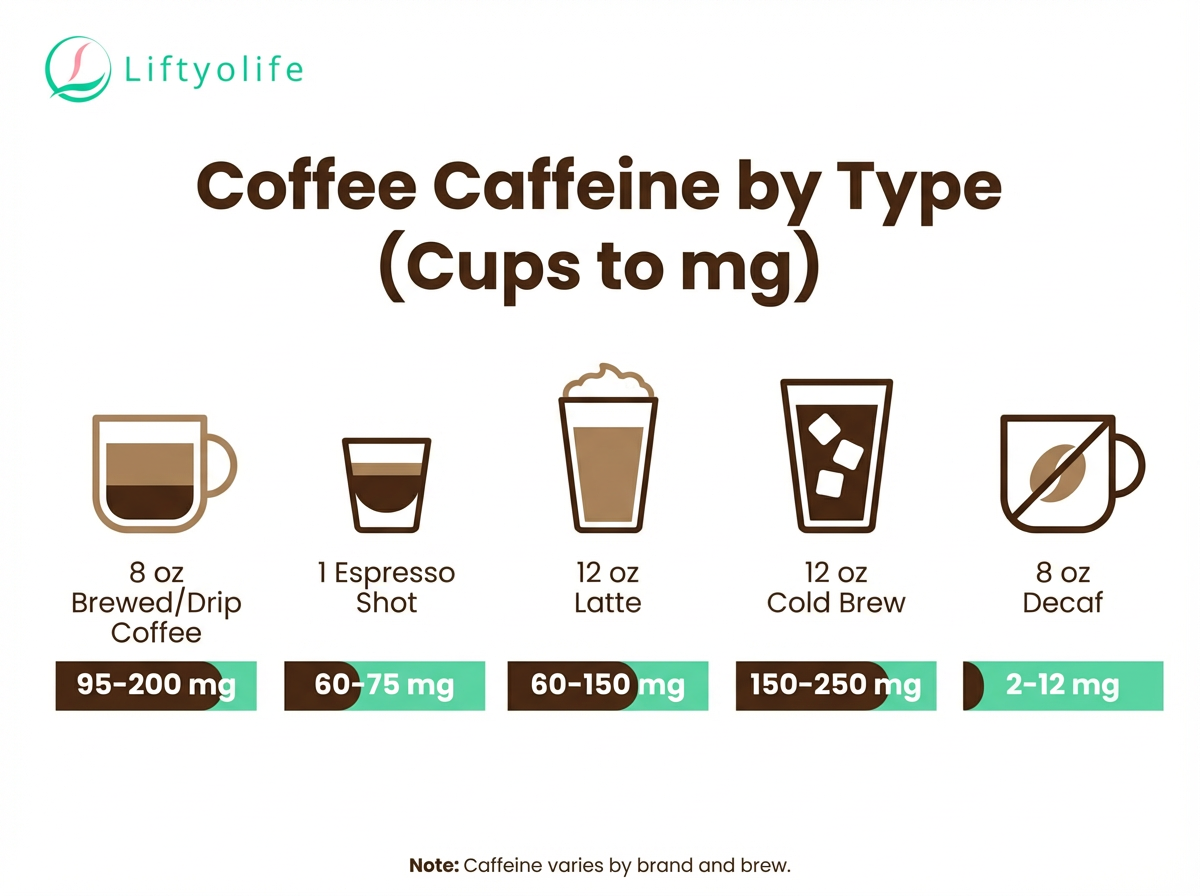
| Coffee type | Typical serving | Typical caffeine (mg) | Notes |
|---|---|---|---|
| Brewed/drip coffee | 8 oz | 95 to 200 | Wide range (Mayo Clinic) |
| Espresso | 1 shot (1 oz) | Varies by brand | Often ~60 mg, but varies |
| Latte/cappuccino | 12 to 16 oz | Varies by shots | Count shots, not cup size |
| Cold brew | 12 oz | Often higher | Concentration varies widely |
| Instant coffee | 8 oz | Varies by brand | Usually lower than brewed |
| Decaf coffee | 8 oz | Not zero | Small amount still counts |
Match your drink to the closest serving size and scale up if your cup is bigger (a 16 oz brewed coffee is roughly two 8 oz cups).
Quick tip: chain shops often publish caffeine or nutrition info. That’s the best way to know what your “medium” actually contains.
Signs you’re drinking too much coffee
Too much coffee side effects can start small and look like everyday stress: lighter sleep, more irritability, or a stomach that feels “off.” The key point is that your personal limit may be lower than 400 mg, especially if you’re sensitive or you drink caffeine late.
Educational note: this checklist is not a diagnosis. Use it as a signal to adjust intake and get medical help for severe symptoms.
Sleep and energy
Mood and nerves (jitters, anxiety)
Heart and circulation
Digestive and bathroom issues
Head and withdrawal cycle
Urgent: seek care now
- Chest pain, severe shortness of breath, or new confusion
- Fainting, seizure, or severe dizziness
- Severe vomiting, severe agitation, or hallucinations
If this sounds like you: try reducing caffeine for 7 to 14 days and track sleep and symptoms. Patterns show up fast.
Who should limit coffee more strictly?
Some people reach “too much” sooner because caffeine lasts longer in their system, symptoms are easier to trigger, or the stakes are higher (pregnancy, heart rhythm symptoms). If you’re unsure where you fit, start by tracking your intake using the worksheet and your sleep for one week.
Pregnancy, trying to conceive, and breastfeeding
Why it matters: Caffeine metabolism slows in pregnancy, and clinical guidance is more conservative.
Safer approach:
- Many clinicians advise 200 mg/day or less during pregnancy (ACOG)
- Count caffeine from all sources, not just coffee
- If you’re unsure, bring your worksheet to your prenatal visit
Teens and kids
Why it matters: Kids and teens are smaller and more sensitive to sleep and anxiety effects. Energy drinks are an outsized risk because they deliver high doses quickly.
Safer approach:
- Avoid energy drinks and concentrated products
- If a teen uses caffeine, keep it modest and focus on sleep and breakfast first
- If caffeine is being used to “fix” exhaustion, treat sleep as the real problem
Anxiety or panic sensitivity
Why it matters: Caffeine is a stimulant and can increase nervousness. In sensitive people, it may trigger panic-like feelings.
Safer approach:
- Start with smaller servings (4 to 6 oz) or use half-caf
- Avoid empty-stomach coffee; pair it with breakfast
- Move your last cup earlier and track anxiety for 7 days
If you want a related deep dive, see caffeine and ADHD for more on overstimulation-style symptoms and why mixing stimulants can feel rough.
High blood pressure or heart rhythm symptoms
Why it matters: Some people notice palpitations or rapid heart rate after caffeine, especially at higher doses or when dehydrated.
Safer approach:
- Treat palpitations as a reason to reduce caffeine and talk to a clinician
- Avoid stacking coffee plus energy drinks
- Choose smaller servings and earlier timing
Medication and supplement interactions
Why it matters: Some medications and supplements can interact with caffeine or increase stimulant effects.
Safer approach:
- Ask your pharmacist or clinician whether caffeine matters for your specific meds
- If you notice jitters, insomnia, or palpitations after combining caffeine with a new medication or supplement, cut back and get advice
Can coffee help with weight loss?
Coffee and weight loss can go either way. Caffeine may help you feel more alert, improve workout performance, and reduce appetite short-term for some people. It can also be a smart replacement if it helps you skip sugary drinks.
But too much coffee can backfire because sleep matters for hunger, cravings, and consistency. If caffeine keeps you up, you’re more likely to snack, crave quick carbs, and feel too tired to move the next day. Add-ins can also turn coffee into a high-calorie habit without you realizing it.
Weight-loss-friendly coffee rules:
- Keep it mostly black or lightly milked
- Minimize syrups, sweet foam, and flavored creamers
- Watch “healthy-sounding” extras that add calories (whipped cream, heavy pours)
- Don’t use coffee to compensate for chronic sleep loss
- If you’re jittery, drink coffee with breakfast
- Set a caffeine cut-off time to protect sleep
For a broader weight-loss habit framework, you can also read how to lose 5 kg in a month (especially the part about caffeine and sleep).
How to cut back without headaches
If you drop from 4 to 6 cups a day to zero overnight, withdrawal headaches and fatigue are more likely. A taper takes 7 to 14 days, but it’s usually much more comfortable.
- Measure your real intake for 2 days. Use the worksheet so you’re not guessing.
- Reduce by about 25% every 2 to 3 days. Example: 4 cups daily goes to 3, then 2, then 1.
- Shrink the cup before you change the habit. Pour 12 oz instead of 16 oz.
- Swap one drink to half-caf. Mix regular and decaf grounds, or order half-caf espresso.
- Move caffeine earlier. Many people sleep better if they stop caffeine 6 to 8 hours before bed (caffeine half-life is about 5 hours on average).
- Pair coffee with food and water. This can reduce nausea and jitters.
- Expect mild withdrawal for a few days. Headache, sleepiness, and low mood can happen.
- Pause the taper if needed. Hold at the new dose a few extra days before reducing again.
If you’re a night-shift worker: set your caffeine cut-off 6 to 8 hours before your planned sleep time, even if that’s in the morning.
Coffee vs tea vs energy drinks (what pushes you over fastest)
Coffee isn’t the only contributor. People often go over their limit when they add an afternoon energy drink, a pre-workout, or “just one more soda,” then wonder why sleep and anxiety feel worse.
| Drink category | Typical serving | Typical caffeine | Notes |
|---|---|---|---|
| Brewed coffee | 8 oz | 95 to 200 mg | Wide range |
| Tea (black/green) | 8 oz | 30 to 50 mg | Usually lower |
| Soda | 12 oz | 30 to 40 mg | Easy to forget |
| Energy drinks | 8 to 16 oz | 40 to 250 mg | Some very high |
Common pitfalls:
- Large sizes, refills, and extra shots can double your day fast
- Energy shots, pre-workouts, and powders are concentrated and easier to overdo
- Decaf isn’t zero, so multiple decafs still add up
Also important: the FDA specifically warns that highly concentrated caffeine (powders/liquids) can deliver toxic doses quickly and is harder to measure safely.
When to talk to a clinician + medical review & references
Talk to a clinician if:
- You have persistent insomnia even after moving caffeine earlier
- Anxiety or panic feelings worsen with caffeine
- You notice palpitations, rapid heartbeat, or blood pressure concerns
- You’re pregnant/trying to conceive/breastfeeding and want a personalized limit
- You take medications and suspect caffeine is worsening side effects
Seek urgent care now if:
- You have chest pain, fainting, seizure, severe shortness of breath, or new confusion
- You have severe vomiting, severe agitation, or feel out of control after caffeine
Editorial & medical review: Written by a health writer (non-clinician). Reviewed for clarity and safety by the Liftyolife editorial team. Last updated: 2025-12-22.
Bottom line
For most healthy adults, coffee is usually fine up to about 400 mg caffeine/day (often around 4 small cups of brewed coffee), but symptoms are your body’s real limit. If sleep, anxiety, stomach upset, or palpitations show up, cut back or move caffeine earlier and reassess for a week.
- Know your real cup size (8 oz vs 16 oz changes everything)
- Protect sleep by stopping caffeine 6 to 8 hours before bed
- Taper down over 7 to 14 days if you want fewer withdrawal headaches
Coffee can fit into a healthy routine, but only if it’s working with your body instead of against it.
Frequently Asked Questions
How much coffee is too much in a day?
For most healthy adults, more than ~400 mg caffeine/day is commonly considered too much (FDA). That’s often around 4 cups of brewed coffee, but it varies with coffee type and mug size. If you get insomnia, jitters, or palpitations, your personal limit may be lower.
Is 6 cups of coffee a day too much?
It can be, especially if those cups are large or strong. Six “cups” may push many people over ~400 mg/day depending on brew strength and serving size. If sleep, anxiety, or heart symptoms show up, treat it as too much for you.
How many mg of caffeine are in a cup of coffee?
An 8 oz brewed coffee is often cited in the ~95–200 mg range (Mayo Clinic), depending on brew and brand. Larger servings can contain much more. Espresso-based drinks depend mainly on the number of shots.
Can too much coffee cause anxiety or panic feelings?
Yes. Caffeine can increase nervousness, jitters, and anxiety in some people, and can feel like panic in sensitive individuals. Reducing slowly (instead of quitting abruptly) often makes the transition easier.
Can too much coffee cause heart palpitations?
It can. Some people notice palpitations or a fast heartbeat after higher caffeine intake or when combining multiple caffeine sources. If you have chest pain, fainting, or severe symptoms, seek urgent medical care.
How late is too late to drink coffee?
Many people sleep better if they stop caffeine 6 to 8 hours before bed, based on caffeine’s average half-life of about 5 hours (NIH). If you have insomnia or feel sensitive, you may need an earlier cut-off. Track your sleep for a week while shifting your last cup earlier to find your best time.
References
- FDA: Spilling the Beans: How Much Caffeine is Too Much? – FDA overview of caffeine safety and 400 mg/day guidance.
- ACOG: Moderate Caffeine Consumption During Pregnancy – Pregnancy guidance (commonly 200 mg/day).
- NIH (NCBI Bookshelf): Caffeine – Pharmacology and half-life range.
- FDA: Guidance for Industry: Highly Concentrated Caffeine in Dietary Supplements – Risks of concentrated caffeine powders/liquids.
- Cleveland Clinic: Caffeine Overdose – Symptoms and safety considerations.