Quick answer: Can coffee help weight loss?
Coffee may modestly support weight loss by slightly increasing calorie burn and improving exercise performance, especially when you drink it low-calorie (black or lightly modified). The catch is that the effect is usually short-term, and added calories or sleep disruption can easily outweigh it. For most healthy adults, the FDA says up to 400 mg caffeine/day is generally safe.
- Most likely benefit: a small, short-term boost in energy and workout output.
- Best form: black coffee or coffee with a small splash of milk, no sugar.
- Safe ceiling: up to 400 mg/day caffeine for most adults – FDA.
- People who should be cautious: those with anxiety, insomnia, reflux, pregnancy, heart rhythm issues, or on certain meds.
- Make-or-break factors: your sleep quality and the calories you add (jump to timing and sleep guidance).
How coffee could support weight loss
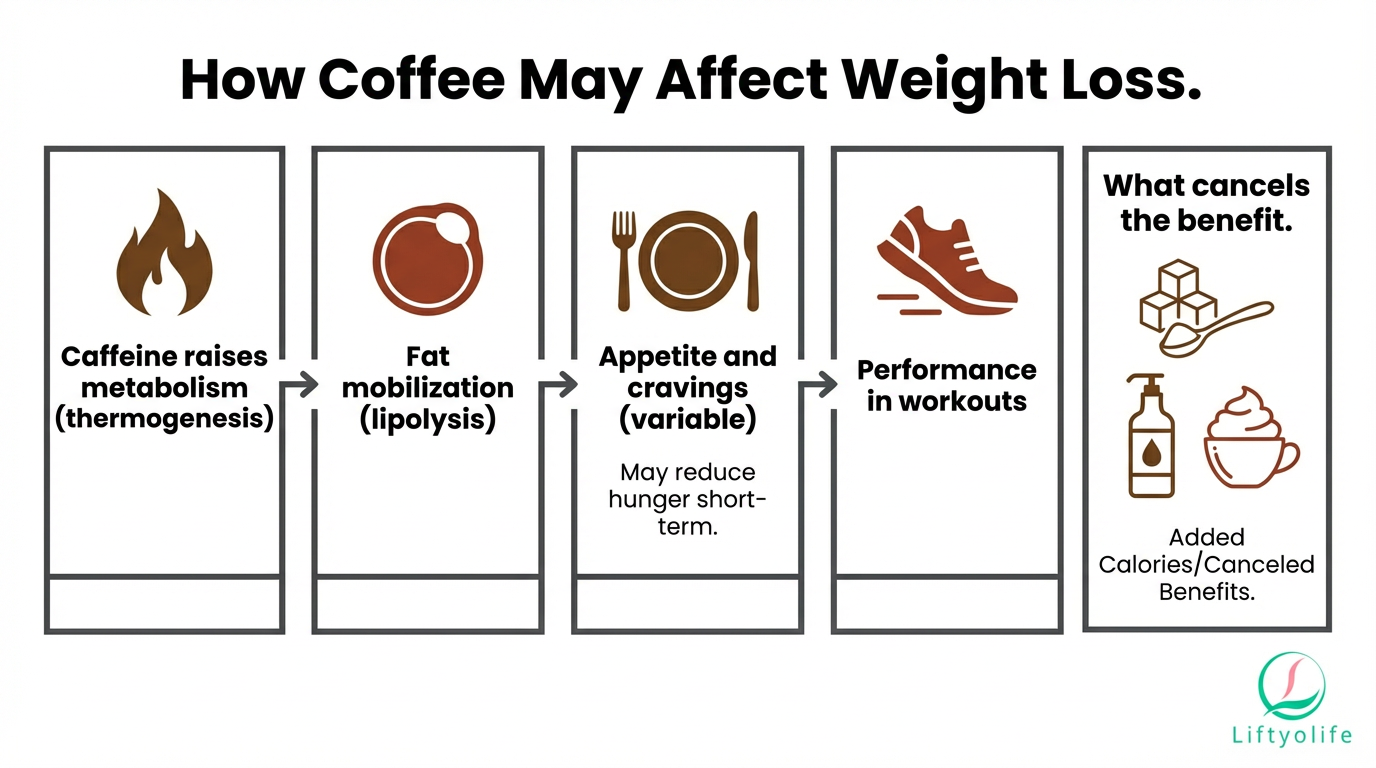
Coffee’s weight-related effects come mostly from caffeine, a stimulant that changes how your nervous system and hormones behave. Think of coffee as a tool that can nudge a few levers, not a fat-melting switch.
- Metabolism (thermogenesis/RMR): Thermogenesis means heat production, and resting metabolic rate (RMR) is the calories you burn at rest. Caffeine can increase energy expenditure for a few hours, which may slightly raise daily calorie burn.
- Fat mobilization (lipolysis + fat oxidation): Lipolysis is the breakdown of stored fat into fatty acids. Fat oxidation is using that fat for energy, often during exercise. Caffeine can increase fatty acid availability, and some people burn a higher share of fat during submax exercise.
- Appetite and cravings: Coffee can blunt appetite for some people, especially between meals. For others, it can raise anxiety, irritability, or blood sugar swings, which can increase cravings later.
- Exercise performance: Caffeine can reduce perceived effort and help you train a bit longer or harder. Over weeks, that extra training quality can matter more than the small calorie burn from caffeine itself.
The key point is that none of these mechanisms guarantee fat loss without an overall calorie deficit and consistent habits.
What the research actually shows
Coffee research is messy because people drink coffee in very different ways, and they also differ in sleep, stress, diet, and caffeine tolerance. Still, a few themes show up consistently.
Metabolism changes are usually small
In controlled studies, caffeine increases energy expenditure for a limited window. For example, one classic study found a ~7% increase in metabolic rate over 3 hours after caffeine (PubMed: 7369170). Repeated smaller doses can increase daytime energy expenditure in some studies, but the effect does not necessarily carry into the night (PubMed: 2912010).
In real life, a “small” bump can help, but only if your coffee habit doesn’t come with extra calories or poor sleep.
Fat oxidation increases during exercise
A 2020 systematic review and meta-analysis reported that caffeine ingestion increases fat oxidation during exercise, especially at lower-to-moderate intensities, although responses vary by training status and dose (PubMed: 33255240). Practically, this matters most if it helps you sustain workouts and overall activity week to week.
Long-term weight loss outcomes are mixed
Long-term trials do not show coffee as a reliable standalone weight-loss strategy. Why the mixed results?
- Tolerance develops: Regular users can adapt, so the metabolism boost may shrink over time.
- Sleep gets disrupted: Caffeine later in the day can reduce sleep quality, and short sleep is linked with higher appetite and lower dietary control.
- Calories sneak in: Many coffee drinks come with enough sugar and fat to wipe out any small calorie burn.
- Lifestyle confounding: Coffee intake correlates with other habits (like shift work or high stress) that can obscure cause and effect.
Evidence snapshot
- Energy expenditure: Small short-term increase; strongest soon after caffeine. Strength: Moderate.
- Fat oxidation in exercise: Often increases during submax workouts. Strength: Moderate.
- Appetite suppression: Some people eat less, others crave more later. Strength: Low to mixed.
- Meaningful weight loss alone: Not consistently seen without diet and activity changes. Strength: Low.
Black coffee calories are tiny, about 2 calories per 8 oz in common nutrition databases and summaries, which makes it easy to fit into a weight-loss plan.
But coffee is also a common delivery system for sugar and fat. A sweet latte, flavored creamer, or blended drink can turn your “quick coffee” into a snack or dessert. The tricky part is that liquid calories often do not feel filling, so it’s easy to drink them and still eat the same meals.
High-calorie add-ins to watch
- Flavored syrups and sweetened sauces
- Sugar, honey, and sweetened condensed milk
- Heavy cream, half-and-half, and whipped cream
- “Coffee drinks” with ice cream or toppings
- Large portions that double (or triple) the add-ins
Black coffee vs popular coffee drinks
| Coffee choice | What’s in it | Typical calorie impact | Weight-loss friendly? | Better version |
|---|---|---|---|---|
| Black coffee | Coffee + water | Very low | Yes | Keep it plain |
| Coffee + half-and-half | Small dairy splash | Low to moderate | Usually | Measure 1 tbsp |
| Coffee + sugar | Added sweetener | Low to high | Sometimes | Cinnamon, less sugar |
| Flavored latte/mocha | Milk + syrup/sauce | Often high | Depends | Smaller size, less syrup |
| “Bulletproof” coffee | Butter + oil | Very high | Usually no | Add protein at breakfast |
Portion size drives most of the calories. A “splash” can become several tablespoons. If you use plant milks, check whether they are sweetened. If you track intake, log the add-ins, not just “coffee.”
How to drink coffee for weight loss
- Start simple. Use black coffee, cold brew, or an Americano, or add a measured splash of milk. If you’re sensitive, start with ½ cup.
- Set a caffeine ceiling. Aim to stay at or below 400 mg/day caffeine for most adults (FDA). More is not better if it worsens sleep or anxiety.
- Time it on purpose. Drink coffee earlier in the day, and if you train, try it 30 to 60 minutes pre-workout.
- Do not “coffee-only” your morning if it backfires. Pair coffee with protein and fiber, like eggs and fruit or Greek yogurt and oats, so you’re not ravenous at lunch.
- Track your signals. If your sleep gets worse, you feel jittery, or reflux flares, cut back, switch to half-caff, or move your last cup earlier.
Best timing and dosage
Caffeine can be useful, but it also lingers. The average caffeine half-life is about 5 hours, and it can range widely from person to person. That means a mid-afternoon coffee may still be active at bedtime.
Pre-workout coffee
- Timing: Try coffee 30 to 60 minutes before training.
- Dose: Start small, about 50 to 100 mg caffeine and only increase if you feel good.
- Hydration: Coffee counts toward fluids, but have water too, especially if you sweat a lot.
If sleep is a problem
- Set a cut-off time: Many people do better stopping caffeine 6 to 10 hours before bed, but your best cutoff depends on your sensitivity and bedtime.
- Use decaf or half-caff: You can keep the ritual without as much stimulant effect.
- Reduce and reassess: If weight loss has stalled, improving sleep can be more impactful than squeezing in another cup.
If you want a simple routine that includes caffeine-sensitive options, see this morning wellness routine guide.
Safety and side effects
Caffeine is widely used, but “natural” does not mean harmless. Pay attention to how you feel, and prioritize safety over squeezing out a tiny metabolic edge.
- Sleep: Trouble falling asleep, lighter sleep, or early waking can increase hunger and reduce dietary control the next day.
- Anxiety: Jitters, panic-like symptoms, and irritability are common signs you need less caffeine.
- Heart/BP: Caffeine can raise heart rate and blood pressure in some people. If you have high blood pressure, arrhythmias, or chest symptoms, ask a clinician before using coffee as a pre-workout.
- Reflux: Coffee can trigger heartburn for some people, especially on an empty stomach.
- Pregnancy: ACOG advises keeping caffeine under 200 mg/day during pregnancy.
- Meds: Some antibiotics, stimulants, thyroid meds, and anxiety meds can interact with caffeine. If you take prescriptions, check with your pharmacist or clinician.
When to talk to a clinician: If you have uncontrolled blood pressure, a history of abnormal heart rhythms, pregnancy, or you notice palpitations, dizziness, or worsening anxiety with caffeine, get personalized guidance. Also ask before using high-dose caffeine products or supplements.
Coffee supplements and “fat-burning” add-ons: what to know
Green coffee bean extract is often marketed for fat loss because it contains chlorogenic acid, a compound studied for possible effects on glucose metabolism. The most recent meta-analysis suggests a small average weight reduction in short studies, but the trials are few, small, and short-term, so the real-world impact and long-term safety are still uncertain.
Other trends, like “mushroom coffee” or “fat-burning creamers,” are not automatically weight-loss friendly. The main things that matter are still caffeine dose, sleep effects, and added calories.
Before you buy a supplement
- Check the caffeine amount per serving and how many servings you actually use.
- Avoid products that hide blends behind “proprietary” labels.
- Watch for added sugars, oils, or large serving sizes.
- If you take meds or are pregnant, talk to a clinician first.
Bottom line: use coffee as a small edge
Coffee can be a small supportive tool for weight loss if you keep it low-calorie and protect your sleep. If it makes you snack more, sleep worse, or feel anxious, the tradeoff is not worth it.
- Treat caffeine as a performance and consistency aid, not a fat burner.
- Keep most cups black or lightly modified.
- Stay within a reasonable caffeine limit, often ≤400 mg/day.
- Time coffee so it does not steal sleep.
- Build the basics: protein, fiber, steps, and strength work.
For a practical next step, Liftyolife readers often pair coffee habits with a simple breakfast structure, like this guide on how to eat a high-protein breakfast.
Frequently asked questions
Does coffee burn belly fat specifically?
- Coffee doesn’t target belly fat directly. Fat loss happens systemically across the body.
- Caffeine may modestly increase calorie burn and fat oxidation, but the effect is small.
- Your overall calorie intake, sleep, and activity pattern matter more than where fat comes off.
What’s the best time to drink coffee for weight loss?
- Often best 30 to 60 minutes before exercise for performance.
- Avoid late-day coffee if it disrupts sleep, since sleep loss can increase hunger.
- If you get jitters, use a smaller dose earlier in the day.
How much coffee is too much for weight loss?
- For most adults, stay at or below ~400 mg caffeine/day (FDA).
- More isn’t better. Side effects can reduce activity and worsen sleep.
- In pregnancy, many guidelines advise limiting caffeine to ~200 mg/day (ACOG).
Does the metabolism boost from caffeine last all day?
- The boost is typically short-term, strongest soon after intake.
- Regular users may develop tolerance, reducing the effect.
- Consistency in diet and training drives long-term results.
Is green coffee extract better than drinking coffee?
- Evidence is mixed and supplement quality varies.
- Coffee itself is easier to dose and usually better studied for caffeine effects.
- Talk to a clinician if you’re considering supplements, especially if you take medications.
References and medical review
Medically reviewed by: Jane Doe, RD (Registered Dietitian) | Review date: 2025-12-22
- FDA: Spilling the Beans: How Much Caffeine is Too Much? – FDA guidance on caffeine intake (including the commonly cited 400 mg/day for most healthy adults).
- NCBI Bookshelf: Pharmacology of Caffeine – Caffeine half-life and factors that change caffeine metabolism.
- ACOG: Moderate Caffeine Consumption During Pregnancy – Guidance on limiting caffeine to under 200 mg/day in pregnancy.
- Caffeine and energy expenditure (PubMed 7369170) – Example of short-term metabolic rate increase after caffeine intake.
- Caffeine and fat oxidation during exercise meta-analysis (PubMed 33255240) – Systematic review on caffeine’s effect on exercise fat oxidation.
- Green coffee bean extract (chlorogenic acid) meta-analysis (2023) – Small, short-term effects with major limitations.