
This guide breaks it down into a clear foods list, what to limit, a comparison table, and a repeatable 7 day MIND diet meal plan that can also support weight loss without extreme rules. Liftyolife focuses on practical steps you can actually follow.
Contents showOne minute takeaway
- Think plants first: vegetables, berries, beans, nuts, whole grains.
- Use olive oil as your main fat most days.
- Add fish and poultry as your main proteins more often than red meat.
- Limit butter, cheese, fried foods, pastries, and sugary drinks.
- Weight loss is possible when you pair the pattern with portion awareness and fewer liquid calories.
Who this is for
- Adults 35+ who want a simple, research-backed eating pattern for brain health
- Anyone who prefers a flexible plan instead of strict tracking
- People who want a week of meals they can repeat to make healthy eating easier
Educational note: This article is general information, not personal medical advice. If you have a medical condition or take medications, check with your clinician before making major diet changes.
What Is a Brain Diet and Why MIND Fits Best
What is the brain diet
A brain diet is a whole-food eating pattern that prioritizes vegetables, berries, nuts, beans, whole grains, fish, and olive oil while limiting ultra-processed foods high in saturated fat and added sugar. The MIND diet fits best because it combines Mediterranean and DASH principles with extra emphasis on foods linked to cognitive health.
The MIND diet was developed by researchers at Rush University and is commonly described as Mediterranean DASH Intervention for Neurodegenerative Delay. The logic is straightforward: many brain changes are tied to blood flow, inflammation, and oxidative stress. Foods that support vascular health and provide antioxidants are a sensible foundation.
Just as important, MIND is not a promise. It is not a cure for Alzheimer disease, and it cannot guarantee prevention of dementia or cognitive decline. It is also not a supplement protocol. It is simply a realistic framework that makes it easier to eat more foods for brain health most days.
Key terms in plain language
- MIND diet: A Mediterranean and DASH hybrid designed to support brain healthy eating habits.
- Mediterranean diet: A traditional-style pattern rich in vegetables, legumes, fish, olive oil, and minimally processed foods.
- DASH diet: An eating pattern created to help manage blood pressure by focusing on produce, whole grains, and lower sodium choices.
- Cognitive decline: A gradual change in thinking skills like memory and processing speed that can happen with aging.
Brain Diet Foods List: Eat More and Limit These
If you want a brain diet you can actually follow, start by learning the short list of MIND diet foods to eat most often. Then pick one or two limits to work on each week. That approach is easier than trying to overhaul your whole kitchen overnight.
Quick reference: brain diet foods to eat
- Leafy greens: spinach, kale
- Other vegetables: broccoli, peppers
- Berries: blueberries, strawberries
- Nuts: walnuts, almonds
- Beans and lentils: black beans, chickpeas
- Whole grains: oats, brown rice
- Fish: salmon, sardines
- Poultry: chicken, turkey
- Olive oil: extra virgin olive oil, olive oil based dressings
- Wine optional: red wine, sparkling wine or skip entirely if alcohol is not safe for you
A simple portion guide that works for many adults:
- Vegetables: fill about half your plate at lunch and dinner
- Protein: a palm-sized portion of fish, poultry, or beans
- Whole grains or starchy veg: a fist-sized portion
- Fat: 1 to 2 teaspoons of olive oil at a meal, more if it fits your calorie needs
From a weight loss angle, this pattern helps because it leans on protein, fiber, and healthy fats, which usually keeps you full longer than pastries, chips, or sugary drinks.
Foods to limit or avoid
- Butter and margarine (swap: olive oil or avocado)
- Cheese (swap: a sprinkle of feta or try plain Greek yogurt sauces)
- Red meat (swap: beans, fish, poultry)
- Fried foods and fast food (swap: baked or air-fried at home)
- Pastries and sweets (swap: fruit plus yogurt or a few squares of dark chocolate)
- Sugary drinks (swap: sparkling water, unsweetened tea)
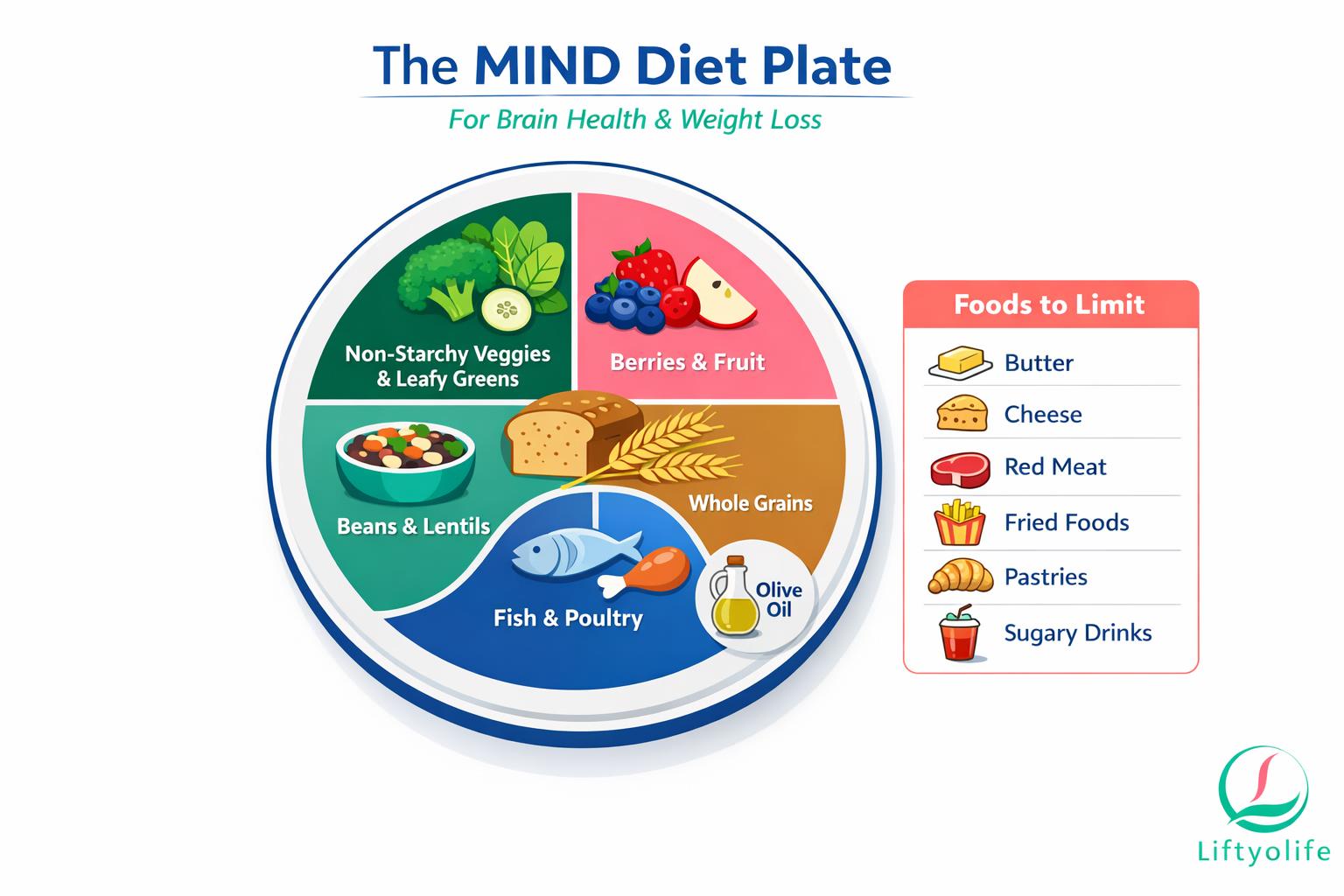
Table: Brain diet foods to eat vs limit
| Eat more often | Limit most days |
|---|---|
| Leafy greens | Butter, margarine |
| Other vegetables | Cheese |
| Berries | Red meat |
| Nuts | Fried foods |
| Beans, lentils | Pastries, sweets |
| Whole grains | Sugary drinks |
| Fish | Fast food |
| Poultry | Processed meats |
| Olive oil | Refined grains |
| Water, unsweetened tea | Candy, ice cream |
MIND vs Mediterranean vs DASH: What Is Different
If you only pick one plan for a brain diet, choose MIND because it was designed with brain-focused research in mind. If your main health goal is blood pressure control, DASH is often the most direct fit. For a broad, flexible lifestyle pattern with strong overall evidence, Mediterranean is a great foundation and overlaps heavily with MIND.
All three diets are plant-forward and lower in ultra-processed foods. The key point is that MIND is basically the overlap, with a few extra priorities and limits.
| Diet | Primary goal | What you eat most | What you limit | Best for |
|---|---|---|---|---|
| MIND | Brain health focus | Veg, berries, beans, grains | Butter, cheese, sweets | Simple brain diet framework |
| Mediterranean | Heart and metabolic health | Veg, olive oil, fish | Processed foods, sugar | Long-term lifestyle eating |
| DASH | Blood pressure | Produce, grains, lean protein | Sodium, red meat, sweets | Hypertension-friendly meals |
If your goal is weight loss plus brain health, any of the three can work. The deciding factor is consistency. Choose the pattern that matches your cooking style, budget, and schedule, then use MIND priorities like leafy greens and berries as your weekly targets.
7 Step Starter Plan and a 7 Day Brain Diet Meal Plan
You do not need perfection to get traction. You need a system you can repeat when life is busy.
How to start in 7 steps
- Set your baseline swap: Use olive oil instead of butter for cooking this week.
- Add leafy greens daily: Put spinach in eggs, soups, salads, or smoothies.
- Add berries most days: Frozen berries count and are often cheaper.
- Choose whole grains: Swap white bread or pasta for whole-grain versions.
- Add beans 3 to 4 times weekly: Canned beans are fine, rinse for less sodium.
- Eat fish at least once weekly: Aim for salmon, sardines, trout, or tuna.
- Plan snacks: Nuts, fruit, yogurt, or hummus with veggies.
7 day meal plan
| Day | Breakfast | Lunch | Dinner | Snack |
|---|---|---|---|---|
| Day 1 | Oatmeal + blueberries + walnuts | Spinach salad + chickpeas + olive oil vinaigrette | Salmon + roasted broccoli + brown rice | Greek yogurt + berries |
| Day 2 | Veggie omelet in olive oil + whole-grain toast | Lentil soup + side salad | Turkey chili with beans | Apple + peanut butter |
| Day 3 | Greek yogurt + strawberries + oats | Tuna and white bean salad | Chicken stir-fry with mixed veggies + quinoa | Handful of almonds |
| Day 4 | Overnight oats + frozen berries | Leftover turkey chili + greens | Shrimp or tofu veggie bowl + farro | Carrots + hummus |
| Day 5 | Smoothie: spinach + berries + yogurt | Whole-grain wrap + hummus + veggies + chicken | Baked trout + asparagus + sweet potato | Pear + walnuts |
| Day 6 | Scrambled eggs + sautéed kale | Bean and veggie grain bowl | Veggie and bean pasta with olive oil and herbs | Cottage cheese or yogurt |
| Day 7 | Oatmeal + cinnamon + mixed berries | Leftover lentil soup + salad | Roast chicken + Brussels sprouts + barley | Dark chocolate + strawberries |
One trip shopping list
- Produce
- Spinach or kale, mixed salad greens, broccoli, peppers, onions
- Berries fresh or frozen, apples, pears, lemons
- Carrots, cucumbers, Brussels sprouts, asparagus
- Protein
- Salmon, canned tuna, trout or sardines
- Chicken or turkey
- Eggs, plain Greek yogurt
- Beans and lentils canned or dry
- Pantry and staples
- Extra virgin olive oil, balsamic vinegar, spices, garlic
- Oats, brown rice, quinoa, farro, whole-grain bread or wraps
- Nuts and nut butter, hummus
Weight loss notes that keep it simple
- Use the plate method: half non-starchy vegetables, one quarter protein, one quarter whole grains or starchy veg.
- Aim for protein at each meal: fish, poultry, beans, lentils, yogurt, eggs.
- Watch liquid calories: sweetened coffee drinks, juice, soda, and alcohol can erase your calorie deficit fast.
For more help building repeatable meals and a safe deficit, see Lose Weight Diet: 7-Day Plan + Simple Rules (Safe) and diet strategies compared.
Evidence, Safety, and FAQs for Real Life
What the science says
- Higher MIND diet adherence is linked to a lower risk of cognitive decline in observational research, which means it shows association, not proof of cause and effect.
- A meta-analysis found that higher adherence is associated with lower dementia risk when comparing the highest versus lowest adherence groups.
- The strongest signal appears with long-term consistency over years, not a quick reset.
- Because MIND borrows from Mediterranean and DASH, it is likely supportive for vascular health such as blood pressure and cholesterol management, but results vary by person.
- The pattern is generally safe for most adults because it centers on common whole foods, but personal medical factors still matter.
Safety notes
- If you take blood thinners such as warfarin, talk with your clinician before making big changes in leafy greens intake since vitamin K consistency matters.
- If you have kidney disease or take medications that affect potassium, ask about safe targets for high-potassium foods like beans and some greens.
- If you drink wine, keep it modest or skip it. Alcohol is not required for the MIND diet and may be unsafe for some people.
- Nuts, nut butters, and olive oil are healthy but calorie dense. Measure portions if weight loss is a goal.
- Food allergies and GI conditions change what is realistic. Swap foods within the same group when needed.
FAQs
Can you eat eggs on the MIND diet
Yes. Eggs can fit even though they are not a core MIND food group. Keep portions moderate and cook with olive oil instead of butter. If you have high cholesterol or heart disease risk, ask your clinician for personal targets.
Is coffee good for brain health
Coffee and tea contain antioxidants that may support brain health. Skip sugary flavorings and heavy creamers that conflict with MIND diet limits. If you have anxiety, reflux, or high blood pressure, caffeine tolerance varies.
Is peanut butter brain healthy
It can fit if it is mostly peanuts with minimal added sugar and oils. Portion sizes matter for weight loss because it is calorie dense. Prefer unsweetened natural nut butters and pair with fruit or whole-grain toast.
Can you eat cheese on the MIND diet
The MIND diet recommends limiting cheese rather than eliminating it. Use small portions and choose lower saturated fat options when possible. Swap with yogurt based sauces, herbs, and olive oil for flavor.
How long does it take to see results from a brain diet
Many people notice steadier energy and appetite control within a few weeks. Brain aging outcomes are long term and depend on consistency and overall health. Pair diet with exercise, sleep, hydration, and blood pressure control for the best odds.
Conclusion
A practical brain diet is less about perfect rules and more about repeatable choices: leafy greens, berries, beans, whole grains, fish, and olive oil most days, with fewer sweets, fried foods, and sugary drinks. Start with the 7 steps, run the 7 day MIND diet meal plan for a week, then adjust portions and favorites so it fits your life.
References
- NIH Research Matters: Healthful diet linked to reduced risk of cognitive decline – Overview of research connecting dietary patterns with cognitive outcomes.
- JAMA Psychiatry: MIND diet adherence and dementia risk – Meta-analysis on diet adherence and dementia risk association.
- Neurology: MIND diet adherence and cognitive impairment risk – Study on MIND diet adherence and cognitive outcomes.
- Rush University: New MIND diet may significantly protect against Alzheimer’s disease – Background on MIND diet development and early findings.